
10 Tips for Answering Children’s Questions Well
February 26, 2026
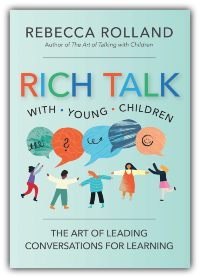 This blog post was adapted from Rich Talk With Young Children by Rebecca Rolland, the practical new guide to rich, intentional conversations that nurture all aspects of child development.
When children ask why and how questions, it is tempting to brush them off or answer with a one-word answer. But these questions are precisely the times when children are primed to learn best.
Answering these questions can:
- Stimulate curiosity: Asking why questions naturally sparks curiosity in children. It encourages them to wonder about the world around them and seek explanations for things they observe.
- Promote critical thinking: Answering causal questions requires children to analyze information, evaluate evidence, and draw logical conclusions. This process helps develop their critical thinking skills, enabling them to make informed decisions and solve problems effectively.
- Encourage deeper understanding: When children ask why questions, they delve deeper into a topic and explore different perspectives. This can lead to a more nuanced and comprehensive understanding of the subject matter.
- Foster a growth mindset: Answering causal questions helps children develop a growth mindset. Their intelligence and abilities can be developed through effort and perseverance. When children explore and understand the why behind things, they see challenges as opportunities for growth.
To answer why and how questions well, try the following 10 top tips:
-
- Own up to not knowing. Take a playful stance toward what you do not know.
- Check in with what children know. For example, before teaching about dinosaurs, ask children when they think dinosaurs lived.
- Support ideas in the right direction. Say, “It’s true, dinosaurs did live a long time ago.”
- Take questions seriously. Say, “That is a good question. Does anyone have any idea?”
- Leapfrog questions. Use one question to spark another. If a child asks, “Why does thunder come before lightning?” try wondering questions such as, “Have you ever seen it happen the other way?”
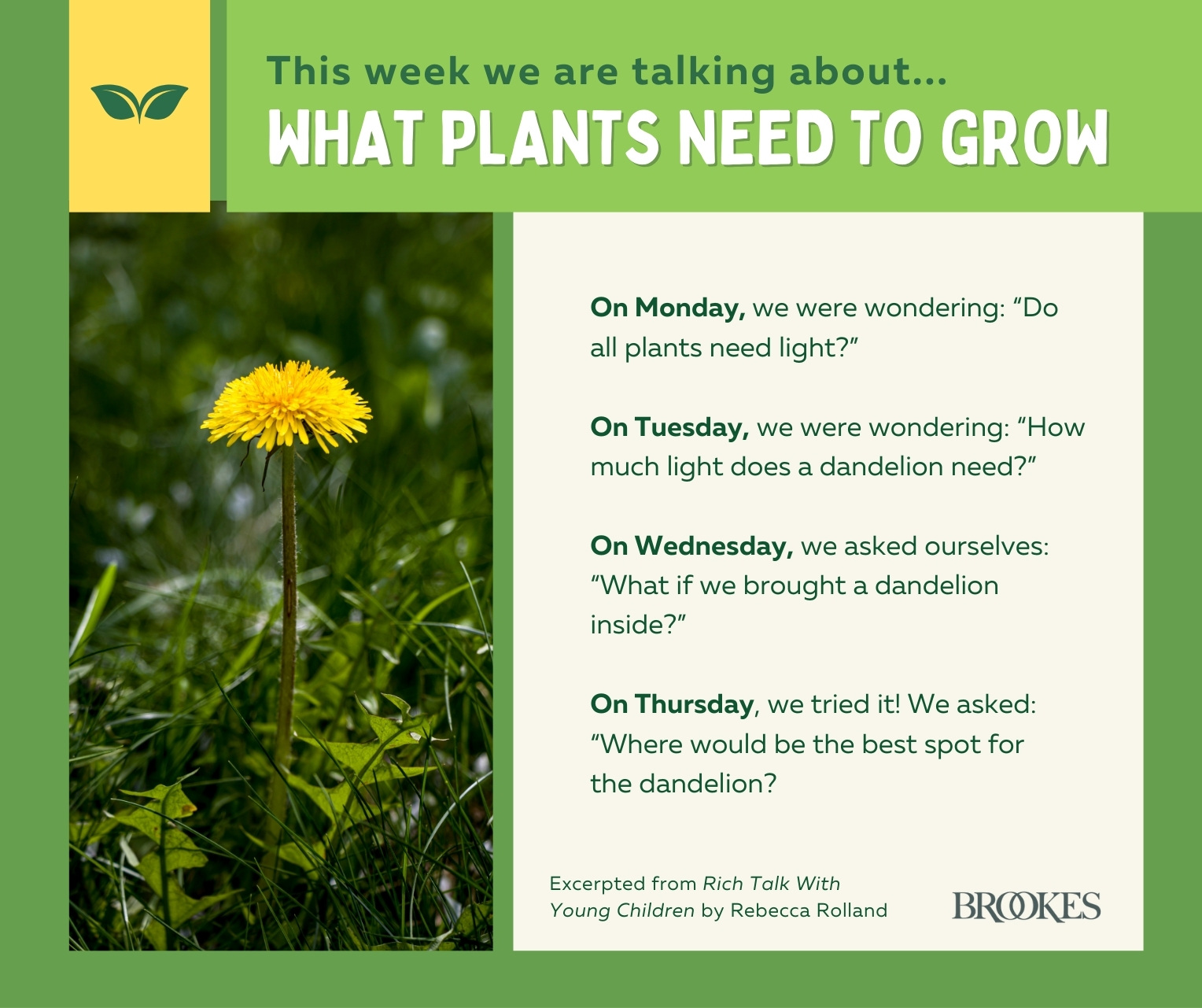
- Track how questions evolve. Try out a wall or a poster that shows a sample of children’s questions over the course of a day or week. You can offer children sticky notes daily, or have a stack of them handy, and encourage each student to write or draw out a question. If needed, serve as the children’s scribe, writing down the questions they dictate. Adjust question complexity depending on children’s ages and stages. Consider a question tracker like this one:
- Do research in the classroom and beyond. Can children find the answer by asking children in another classroom, other teachers, or the librarian?
- Explain when there is more than one theory. You might say, “Not everyone agrees about that.” Ask what children think. Give an overview of what the common theories are, then ask if there are others. Which theory do children think is best? Why?
- Talk about thinking! Ask children: “Did our talk answer your question? What new questions do you have? What else are you now thinking about?” Invite children to notice how their questions are changing.
- Encourage more questions, not fewer. Remind children that scientists and other creative thinkers are always developing deeper questions.
For more guidance on having rich, intentional conversations that nurture all aspects of child development, invest in Rebecca Rolland’s new guide for early childhood professionals!
Rich Talk With Young Children
The Art of Leading Conversations for Learning
By Rebecca Rolland, Ed.D., M.S., CCC-SLP
Engaging, conversational, and grounded in the latest research, this book illuminates the transformative power of rich talk with children ages 2–8—and gives you the specific guidance you need to realize its benefits in any learning environment. You’ll learn how to apply Rebecca Rolland’s popular Rich Talk model through instantly useful strategies, authentic examples, real-world scenarios, and more than 20 downloadable exercises and planning tools.
More posts like this

Eat and Learn! Working Literacy, Math, Science, and Art Into Early Childhood Mealtimes
January 9, 2025
A-Ha Moments & More: 5 Reasons Why Every Early Educator Needs These New Guides
February 13, 2025
Write a Comment
Your email address will not be published. Required fields are marked *
Post a Comment