
10 Trauma-Sensitive Tips to Help Students Feel Safer in School
March 17, 2026
The ongoing impact of trauma is one of the biggest barriers to learning. Whether students are in the midst of trauma or feel unsafe from past experiences, there are many ways you can help them feel safer in school, at the end of this year and during the next school year. These ten trauma-sensitive tips, adapted from Brookes books, will help you strengthen your students’ sense of safety and increase their readiness for learning.
Explicitly Show Students You Are a Safe, Supportive Person

Be explicitly nurturing in your interactions with students, especially those who have experienced trauma and need extra support to feel safe. Traumatized youth need more supervision and structure than other students. Support students by saying things like, “One of the ways I can show you I’m safe is by helping you with lots of things,” or “Maybe that’s something you had to take care of on your own before. Now you get to have help.” Offer help when students need it, but do so in a matter-of-fact and caring way.
-Adapted from Building Trauma-Sensitive Schools by Jen Alexander
Prioritize Rapport Building
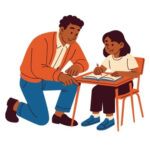
When students see your efforts to develop a relationship with them, they develop trust and start to feel safer. Purposeful rapport building with individual learners positively impacts your entire classroom climate. It fosters more positive peer-to-peer interactions and collaboration, which addresses potentially unmet needs of students experiencing emotional distress that may be connected to trauma.
TRY THIS: Improve your relationships with the learners in your classroom with these 8 Tips on Building Rapport with Students.
-Adapted from The Teacher’s Guide for Effective Classroom Management, Third Edition, by Tim Knoster & Stephanie Gardner

Provide Access to Comfort Items
When a child’s neurological system is on edge, one of the simplest things you can do is provide that child with an item that is comforting. It may be a treasured item that travels from home to school and from school to home, or something that simply stays in the classroom. The item should not be something of monetary value; rather, it is something that the student has positive associations with. Some examples are:
- Treasure boxes where students can keep those sacred items and visit with them, either on a schedule or as needed
- Sweatshirts or coats that provide a sense of safety
- Sensory items that fulfill specific needs (such as a pencil box with a top covered with fake animal fur for a student who is comforted by petting something)
-Adapted from The Re-Set Process by Dyane Lewis Carrere with Wynne Kinder
Avoid Practices that Highlight Discrepancies

Be aware of social barriers that could jeopardize students’ sense of safety and promote injustice. Handle issues such as sharing or writing about what students did on school breaks with extra sensitivity and care. This type of communication can potentially set up students to feel less than in relation to peers and therefore unsafe. It is certainly important to discuss differences honestly and openly with students in hopes of building empathy, but we must make sure our practices are not reinforcing traumatizing societal issues and generations of historical trauma.
-Adapted from Building Trauma-Sensitive Schools by Jen Alexander

Try Nontraditional Seating Positions
You might not think seating positions are related to a sense of emotional safety, but a body that is comfortable is calmer and is not sending distress signals to the brain. The often-used position of criss-cross applesauce does not create deep pressure that is neurologically calming. Offering students a variety of seating positions that are nontraditional (kneeling, side-sitting and leaning on one arm, squatting) can facilitate an increase in focus. Children often discover that locking their arms around their bent knees is helpful to keep their hands away from others or that locking their feet around the legs of the chair feels better. Standing as an alternative to sitting requires more strength and burns more stress chemicals, so it is also a good option when appropriate.
(Exercise caution in using some energy-burning alternatives recommended for students with ADHD. Yoga balls and wobble-stools burn energy but may increase dysregulation in children experiencing trauma.)
-Adapted from The Re-Set Process by Dyane Lewis Carrere with Wynne Kinder

Use Schedules to Support Felt Safety
Some traumatized students who struggle with change may need a posted daily schedule or their own personal schedule to refer to. This brings predictability and a level of safety to their routine. For young children, a visual schedule often works best, whereas older students may be able to use a written outline of the day. Pairing a looks-like and sounds-like series of behavioral expectations with places or spaces on the schedule can be helpful too. Similarly, educators can carry visual cue cards on their lanyards to remind students of regulation strategies or behavioral expectations as needed. And breaking down common procedures into step-by-step directions in pictorial or verbal form may be beneficial.
-Adapted from Building Trauma-Sensitive Schools by Jen Alexander
 Determine a Student’s Safe Spaces
Students who have experienced pervasive trauma often perceive physical spaces in very different ways than other students. For example, some may need to have their back literally against the wall, where they can see what is coming at them, or they may panic at the idea of being cornered or backed into a wall. The key is to notice how different experiences impact the individual student. Notice where students go when given a choice. Keep track of where they do their best academic work. As a student becomes more self-aware, engaging them in identifying the spaces where they feel safe and can focus on work allows them to make emotionally sound choices.
-Adapted from The Re-Set Process by Dyane Lewis Carrere with Wynne Kinder
 Make Safety Maps
Give students a map of the classroom or school and ask them to identify places where they feel safe and unsafe physically and emotionally. Studying patterns that emerge by looking at safety maps from many students may provide insight into systemwide issues. You may also want to privately poll your students to see whether there are any movements or activities that make them feel uncomfortable or unsafe in your classroom.
-Adapted from The Re-Set Process by Dyane Lewis Carrere with Wynne Kinder
Collaborate With Families to Meet Their Needs
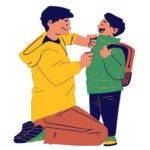
Your students’ real and felt safety often depends on how well family needs for safety and health are being met. Trauma-sensitive schools encourage staff members to work proactively with parent groups and community members to address a variety of needs. You might prioritize linking families with health or social service resources in the community, creating school-sponsored programming for the summer or during breaks, coordinating with local food banks to provide free food bags for families, or organizing drives for free or low-cost clothing, toys, or books.
-Adapted from Building Trauma-Sensitive Schools by Jen Alexander

Celebrate Your School and Community
Celebrate the wonderful things specific to your school and community. Involve all youth in rituals, traditions, and celebrations that are positive and enjoyable. Safety, real and felt, certainly does not begin or end with the absence of harm; rather, it is built upon all the wonderful things that come from the joy of being in community with one another.
-Adapted from Building Trauma-Sensitive Schools by Jen Alexander
***
Stepping back and looking at the big picture, schools must also take important steps to disrupt and prevent racial trauma and develop an effective school crisis team in order to meet their overarching goal of real safety for their students. Here are two essential resources that can help:
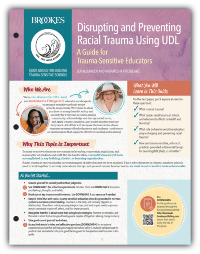
Pick up the new quick guide from Alexander and Fritzgerald, Disrupting and Preventing Racial Trauma Using UDL. It’s full of practical guidance and exercises that will help you reflect productively and start forming an action plan. This summer would be an ideal time to work through the quick guide with your team!
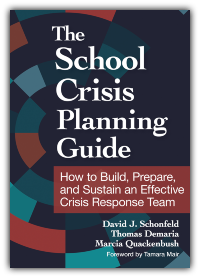
Developed by an author team with decades of experience—including David Schonfeld, the country’s go-to authority on responding to school crisis—this practical guide will help your school build, train, and sustain a highly effective school crisis team that can respond quickly after traumatic events and loss.
More posts like this
6 Guidelines for Trauma-Sensitive School Leadership
September 24, 2024
5 Reasons You’ll Love This NEW Virtual Course on Trauma-Sensitive Teaching
August 27, 2024
Write a Comment
Your email address will not be published. Required fields are marked *
Post a Comment