
6 Books for Supporting Older Students Who Struggle with Literacy Skills
April 21, 2026
Support for the Science of Reading continues to grow: A federal bill that would mandate evidence-based reading instruction nationwide recently passed a crucial legislative hurdle with strong bipartisan support. Many school districts across the country have already committed to retooling reading instruction for learners in the crucial Pre K–3 window.
But while it’s impossible to overstate the importance of ensuring that beginning readers have a strong foundation in phonemic awareness, decoding, and other core literacy skills, languishing test results nationwide have made it clear that the majority of older students are not receiving the support they need to become proficient readers and writers.
Here are six titles to help your struggling older students build confidence and skill as readers and writers, better equipping them for success in a rapidly evolving, increasingly competitive world.
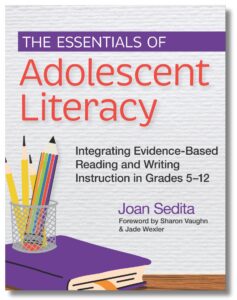
The Essentials of Adolescent Literacy
Integrating Evidence-Based Reading and Writing Instruction in Grades 5–12
Age range: Grades 5–12
In a nutshell:
Whether you’re a teacher, a reading specialist, or a literacy coach, the latest book from bestselling Writing Rope author Joan Sedita is an ideal resource for understanding the unique aspects of adolescent literacy and teaching the skills older students need for success in school and life.
Practical materials:
Implement effective adolescent literacy practices across content areas using the included online materials: downloadable templates, worksheets, and other teacher-friendly resources.
Rave review: “An essential, practical guide for fostering a robust literacy environment that not only enhances academic achievement but also empowers adolescents to become lifelong learners and informed citizens.”—Sharon Vaughn, Ph.D., and Jade Wexler, Ph.D., coauthors of Effective Instruction for Middle School Students with Reading Difficulties
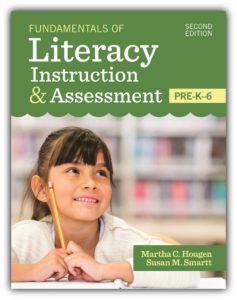 Fundamentals of Literacy Instruction and Assessment, 6-12
Age range: Grades 6–12
In a nutshell:
A perfect first text on adolescent literacy, this expertly organized volume covers the fundamentals of how reading and writing skills develop in older students and how to teach literacy within key academic content areas: language arts, math, science, and history.
Practical materials:
Sample lesson plans for use in tutoring and student teaching, classroom examples illustrating recommended practices, helpful chapter objectives and summaries, in-class exercises and homework assignments, an appendix of formative assessment strategies.
Rave review:
“Will be an enormously useful book in the hands of educators who want to improve literacy outcomes for adolescents.”—Donald Deshler, Williamson Family Distinguished Professor of Special Education, University of Kansas
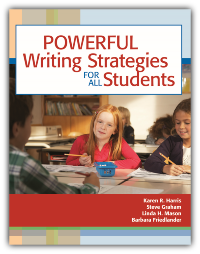 Powerful Writing Strategies for All Students
Karen R. Harris, Ed.D., Steve Graham, Ed.D., Linda H. Mason, Ph.D., Barbara Friedlander, M.A.
Age range: K–8
In a nutshell:
Transform elementary and middle school students into more confident and skilled writers using highly effective, field-tested lesson plans focused on types of writing that are essential to academic achievement, like writing reports and constructing essays for standardized tests.
Practical materials:
Includes optional scripts for teachers and photocopiable support materials, such as cue cards, picture prompts, sheets for graphing story parts, and charts for brainstorming and setting goals.
Rave review:
“A powerful, evidence-based approach to instruction . . . The clear and complete lessons plans included in this volume will help teachers enhance their ability to provide effective instruction to students at all levels.”—Joanna Williams, Professor of Psychology and Education, Teachers College, Columbia University
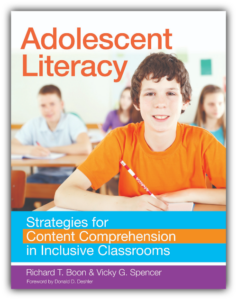 Adolescent Literacy
Strategies for Content Comprehension in Inclusive Classrooms
Richard T. Boon, Ph.D., Vicky Spencer, Ph.D., Sharon Vaughn, Ph.D.
Age range: Grades 6–12
In a nutshell:
Resolve comprehension difficulties across content areas for students in Grades 6–12 with this trusted supplementary text. Special and general educators will get versatile, research-backed strategies for ensuring that every learner—with and without disabilities—reaches their fullest potential as a successful, motivated reader.
Practical materials:
The book’s proven strategies are supported by charts, graphic organizers, mnemonic strategies, and sample lesson plans that can be used in any classroom.
Rave review:
“If implemented, the ideas in this book will ensure that all students, and especially students who have historically challenged the educational system, will learn to read, write, and think in complex ways.”—Douglas Fisher, San Diego State University
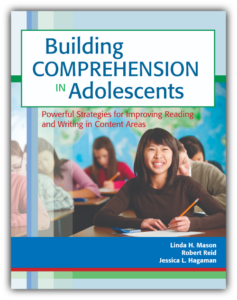 Building Comprehension in Adolescents
Powerful Strategies for Improving Reading and Writing in Content Areas
Linda H. Mason, Ph.D., Robert Reid, Ph.D., Jessica L. Hagaman, Ph.D.
Age range: Grades 6–12
In a nutshell:
Your complete guide to Self-Regulated Strategy Development (SRSD), a highly effective, evidence-based instructional approach. Give students the keys to mastering academic content by independently applying proven strategies for improving reading comprehension and written expression.
Practical materials:
Readers will get photocopiable worksheets and other instructional materials that make the lessons adaptable for any classroom.
Rave review:
“An outstanding book that should be very useful for educators . . . presents strategies for improving students’ reading and writing all in one well-written, easy to understand book.”—Janette Klingner, University of Colorado Boulder
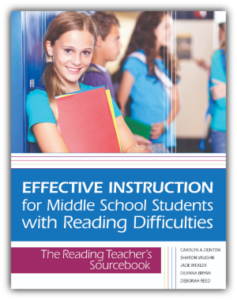 Effective Instruction for Middle School Students with Reading Difficulties
The Reading Teacher’s Sourcebook
Carolyn A. Denton, Ph.D., Sharon Vaughn, Ph.D., Jade Wexler, Ph.D., Deanna Bryan, Deborah S. Reed, Ed.D.
Age range: Grades 6–8
In a nutshell:
Build the foundational knowledge to help struggling middle school students achieve improved fluency, comprehension, word recognition, and vocabulary knowledge. Reading teachers will discover how to select and administer assessments and then use those results to target instruction that delivers results.
Practical materials:
Includes 20 easy-to-adapt sample lessons, with suggested teacher scripts, checklists for planning instruction, key terms and objectives, strategies for guided and independent practice, tips on promoting generalization, and more.
Rave review:
“A practical, evidence-based way to bring out improved student learning outcomes . . . should be required reading in all preservice and inservice teacher education programs.”—Virginia Berninger, Professor and Director of the NICHD-funded Center for OWLs
Older students who struggle with literacy skills need support now to develop the literacy skills they’ll need in adulthood. Take the next steps—add these books to your toolbox, or contact your Brookes representative to put together a customized professional learning package for your staff.
More posts like this
10 Books to Help You Put the Science of Reading Into Practice
January 18, 2024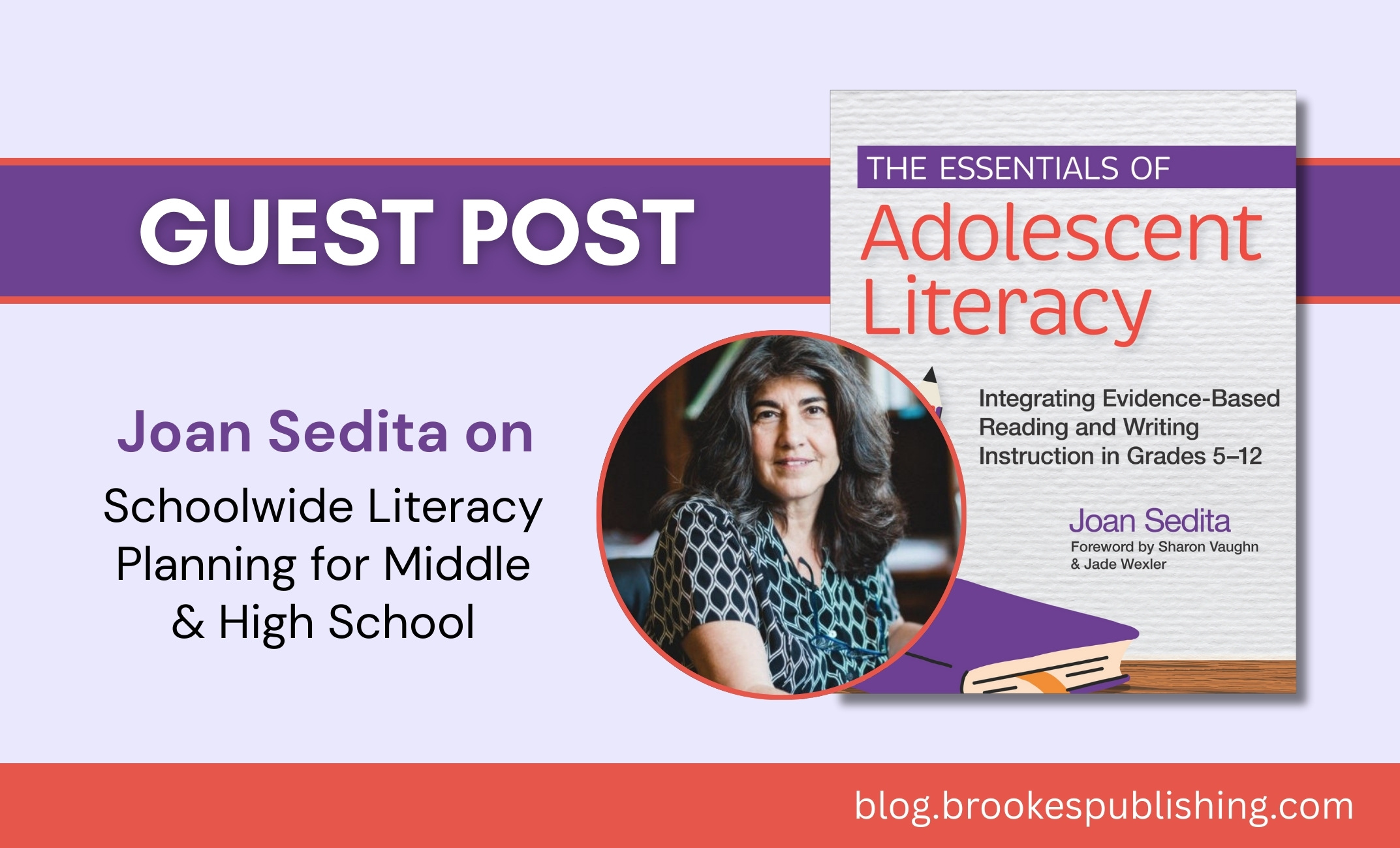
Building Your Schoolwide Literacy Plan for Middle & High School
February 13, 2026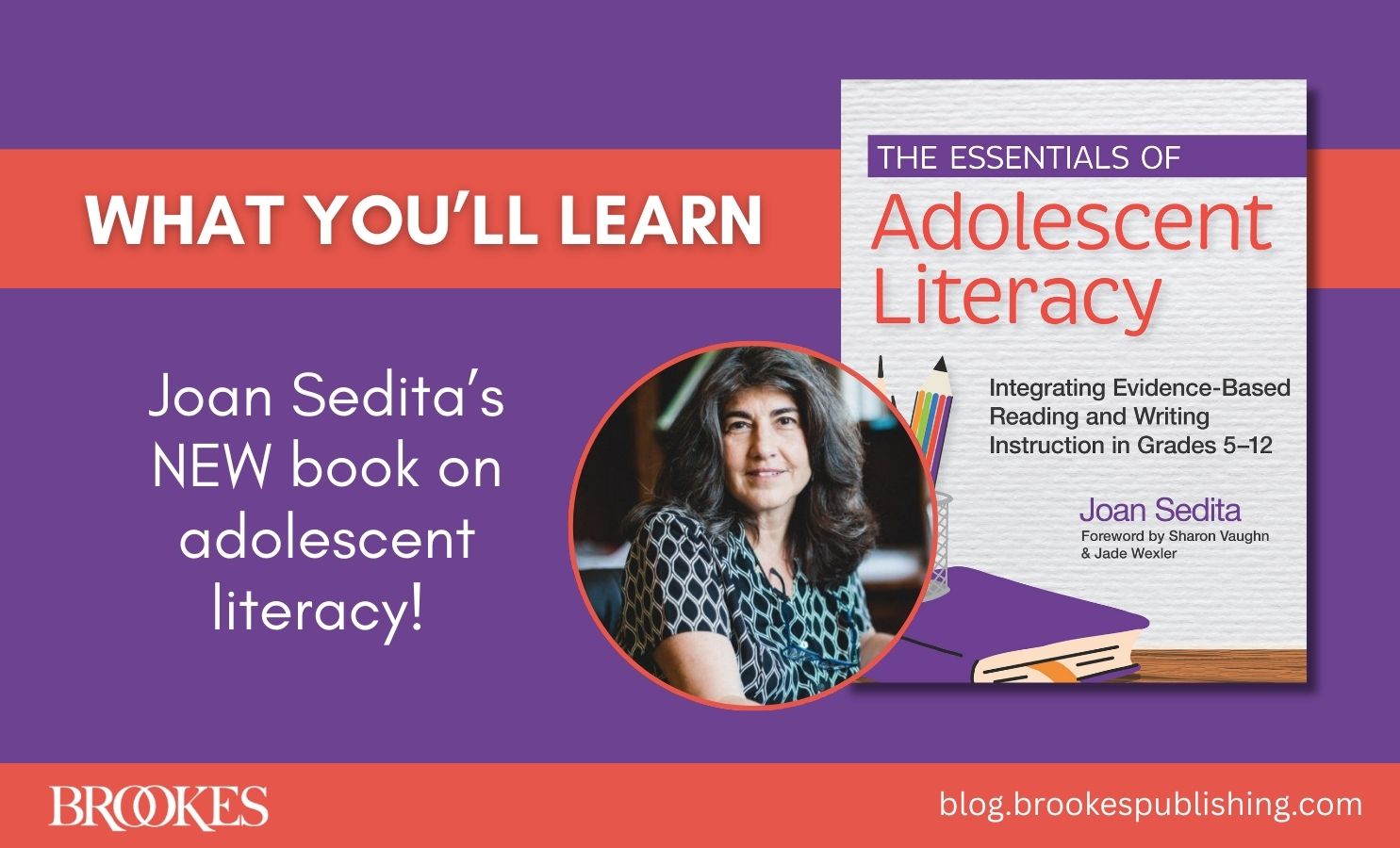
Write a Comment
Your email address will not be published. Required fields are marked *
Post a Comment