
8 Outdoor Activities That Boost Child Development
March 12, 2026
In many areas across the country, it’s been a cold and snow-filled winter—but spring is finally here! It’s the perfect season for getting outdoors with young children and trying some fun activities that build their skills in key developmental areas.
These ideas were adapted from the ASQ-3 Learning Activities (for key developmental areas) and the ASQ:SE-2 Learning Activities (for key social-emotional areas). Try these outdoor activities with the young children in your life, and help them develop new skills while you’re spending quality time together.
 Mystery Journey
When you’re at the park together, ask your child to follow you on a mystery journey. Invent a creative path: you might go over to the cooler, around the blanket, hop across the grass, walk backward, and slide down a slide. When you finish, let your child take a turn leading you through a mystery journey! This is a fun and energetic way to help build your child’s motor skills.
 Water Pictures
This outdoor activity is a great choice for the first dry, warm day of the season. Give your child a plastic bucket of water, a paintbrush, and an old sponge. On a safe paved driveway or wooden fence, let the child paint “disappearing pictures” with the water on the cement or wood. Watch the pictures disappear as the water evaporates. Ask your child why they think the pictures vanished, and talk about what happens when water evaporates into a gas.
 Super Driver
Make an obstacle course for your child outside using anything you have handy: boxes, rocks, toys, a garden hose. Let your little driver push a cart or pull a wagon through the course you set up, steering around the obstacles. Give your child a big hug at the finish line!
 Stuffed Animal Picnic
A warm spring day is the perfect time for an outdoor picnic. To make yours extra special (and give social and communication skills a boost), have your child bring their teddy bear or other favorite stuffed animals on the picnic. Pack a basket just for the stuffies with a blanket, napkins, pretend food, and plastic plates and tea cups. You and your child can have fun “talking for” their furry friends and imagining their picnic conversations. When your picnic is done, have your child (and the bears!) help you clean up.
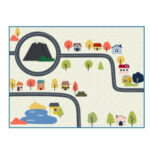 Map It
Go for a walk around the neighborhood with your child and point out streets, buildings, parks, or other landmarks. Then use paper and markers to help your child make a map of your neighborhood. Include the school where they will go for kindergarten. Ask, “Where do our friends live? Do we have other family members in the neighborhood?” Knowing the neighborhood is part of growing up. Your child won’t feel so far from home if they know the way home.
 Cloud Chat
On a spring day when the sky is filled with puffy clouds, try this classic activity, a calming and creative way to build communication skills. Go outside with your child and lie on your back together in the grass (bring a blanket if you like) or sit together on a porch, on a balcony, or near a window where you can see the sky. Take turns describing the different cloud shapes and patterns. Point out the “cloud pictures” you see, and ask your child to describe what they think the clouds look like: “Look. There’s an ice cream cone! What do you see in the clouds?”
 Splash Game
Great for developing motor skills, this game works best with a class or with a group of neighborhood children. On a hot day, have a sponge relay with large sponges and buckets of water. Divide children into two teams. Place two sets of two buckets at opposite ends of an open space, and fill one set with water. The children race to dip their sponge in the water, carry it to the empty bucket, and squeeze the water out. The first team to fill their bucket wins! You can also play catch with the wet sponges.
 Nature Walk
To nurture social and communication skills, go on a nature walk with your child and take turns showing each other interesting things. Be curious together! Everything is new and interesting to them. Pick up a bug that is safe to handle and talk about it. You can talk about how the bug looks or feels. “Look at this little red ladybug. Its legs feel tickly on my hand. Do you want it to hold it?” Now it’s your child’s turn to find something interesting. They may be scared of new things. Teach your child which things are dangerous and which ones are safe.
Have fun trying these and other outdoor activities with children during the warmer weather ahead. And if you have a favorite spring activity of your own, share it in the comments below!
P.S. Don’t forget that activities should be supervised at all times by an adult. Any material, food, or toy given to a young child should always be reviewed for safety first.
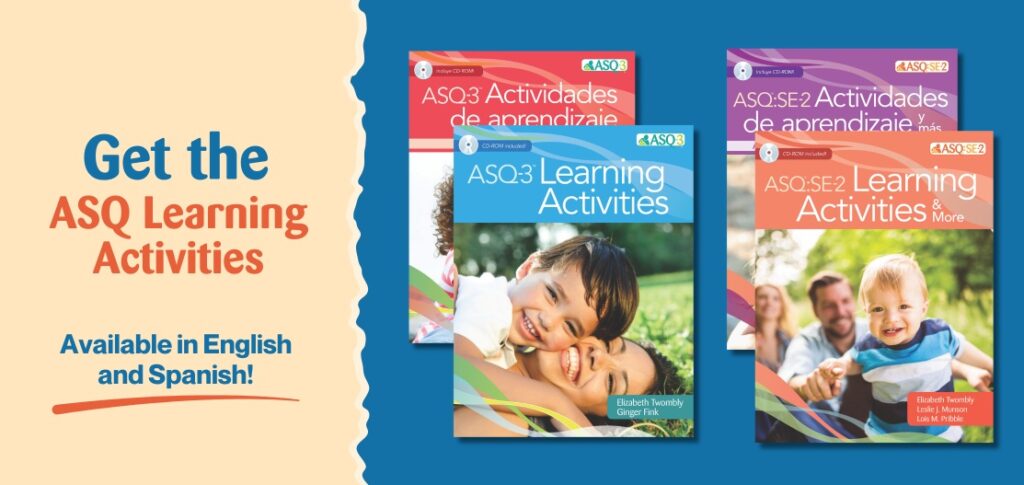
Enhance the growth and development of infants and young children with these fun, easy-to-use learning activities—specially developed to complement ASQ-3 and ASQ:SE-2. Available in English and Spanish!
More posts like this

10 Ways to Promote Curiosity and Scientific Thinking in Young Children
January 26, 2026
9 Ways to Enhance Pretend Play
January 7, 2026
Write a Comment
Your email address will not be published. Required fields are marked *
Post a Comment