
9 Ways to Enhance Pretend Play
January 7, 2026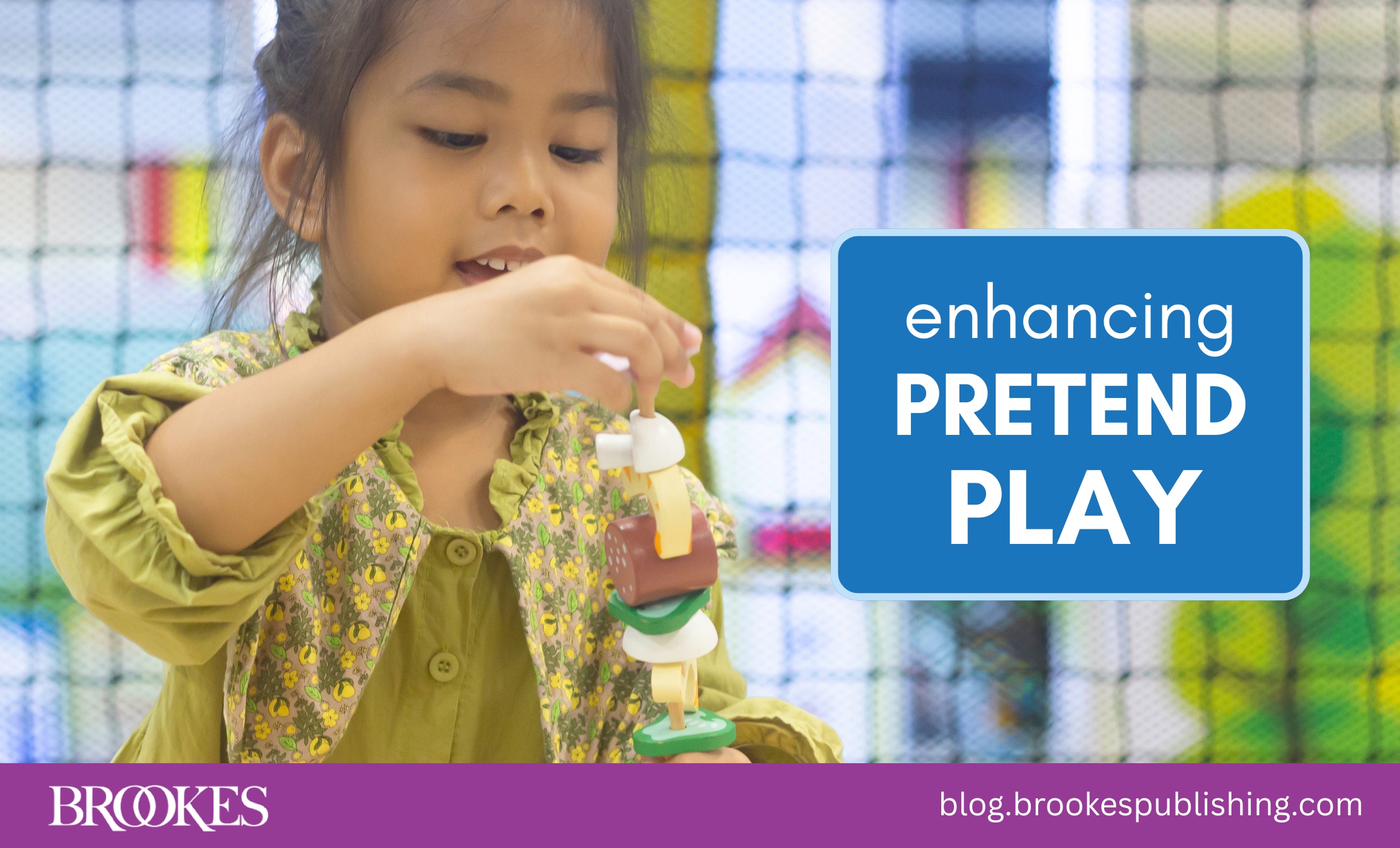
Pretend play is more than just fun for young children. As early childhood expert Kathy Reschke says, “It may be ‘just play’ on the surface, but pretending gives children the freedom to express and grow in their understanding of how the world works by experiencing it from a hundred different angles. It’s an amazing window into children’s view of the world they live in!”
Adapted from some great Brookes resources on early childhood best practice (Reschke’s Quick Reference Guide on Pretend Play, Volume 5 of the tiered AEPS®-3 Curriculum, and Building Blocks for Teaching Young Children in Inclusive Settings), here are 9 effective ways to support pretend play in the classroom.
Choose props thoughtfully
Very early role-playing is so closely tied to what children observe in everyday life, it’s supported best with props that are fairly realistic representations of familiar objects, or discarded “real” objects (kid-proofed, when necessary), like old pans or keyboards. As children get a bit older, though, stretch their creativity by encouraging them to find substitutes or manufacture their own props from open-ended materials like paper, cardboard, scraps of wood, etc. Let your mantra be: “What could you use instead?”
Incorporate relevant cultural elements
Many classrooms strive to be culturally relevant by including props from diverse cultures in the pretend play area. An assumption too often is that somehow children learn about other cultures by playing with objects. But that idea is backwards—children play what they already know. So, for example, unless at least one child is already familiar with cooking with a wok, the children will very likely ignore it and choose cooking props they are familiar with. Instead of just adding multi-cultural props randomly, add them intentionally, after introducing them being used in real life. Invite a volunteer familiar with Asian culture to cook with the children using a wok. Then, when you put a wok in the pretend play kitchen, children will extend their learning about Asian cooking in their play.
Reinforce your curriculum with pretend play
Use pretend play to reinforce a theme you’re working on with your class. Set up a specific play area based on your current classroom theme or the current season. For example, you might set up a doctor’s office when talking about community helpers, an airport when talking about transportation, or a pretend hot chocolate stand during winter.
Look for opportunities to enhance language skills
Use dramatic play as an opportunity to expand on children’s vocabulary. Listen to children as they converse, notice whether they are using correct verb tenses and pronouns, model correct grammar for them, and ask them to repeat after you. Show them how to use words to play together describe their feelings as they work out conflicts.
Incorporate child interests
Develop a prop box that reflects the children’s interests (especially if you have a child who does not play or remain engaged long at the pretend play area). For example, if a child loves stuffed animals, create a pet station in dramatic play that includes animals, pretend food, vet supplies, and so on. Integrate favorite toys, colors, activities, or people. For example, if the child likes yellow, place yellow dress-up clothes, dishes, and other props in the dramatic play area.
Act out favorite stories
Acting out favorite stories is a variation of role-playing that shares many of the social, emotional, and cognitive benefits that social pretend play provides, but with less challenge, since the script and characters are already determined.
The additional structure can be especially helpful for children who are less skilled or experienced in pretend play, who need additional support to participate in pretend play because of special needs, or who have gotten stuck in a negative or aggressive rut in their role playing. When they’re ready to stretch their skills a bit, encourage them to come up with a new ending, add a plot twist, or change a character.
Adapt materials for children who need support
If a child has difficulty gripping or handling tools, for example, provide materials adapted to their needs. Stock the house area with easy-to-grip spoons, forks, and handles. Build up handles with foam or tape. Full-size, heavier utensils may be easier to hold than child-size utensils. Make sure the dress-up clothes are easy to put on and take off (adapt with Velcro). If a child uses a walker or wheelchair, make sure there is enough space in the classroom for the child to maneuver.
Encourage peer support during play
If a child likes to go to the pretend play area but often seems to get stuck after dressing a doll with clothes and shoes, invite children with more advanced play skills into the area. They can show the child what else the doll can wear (e.g., a hat, a purse) and what else the child can do with the doll (e.g., talk to the doll, brush their teeth, walk the doll in a stroller, feed the doll food).
If a child does not often choose pretend play, pair the child with a peer who likes this area. Ask the peer to take the child to the pretend play area so they can play together.
Change up play materials often
To encourage dramatic play, provide materials that children are interested in. Be sure to rotate the play materials when children lose interest in them. Items don’t have to be new. Seek out a variety of sources for play materials, including items purchased at garage sales and thrift stores, old items from around the house, and materials created with cardboard or wood. (Remember to review all materials for safety.)
Pretend play is a powerful way to promote every child’s social, communication, and problem-solving skills. Try these tips in any early childhood setting to enhance children’s pretend play capabilities, and check out the resources behind this article!
- Tips 1, 2, and 6: adapted from Kathy Reschke’s Quick Reference Guide on Pretend Play
- Tips 3, 4, and 9: adapted from Volume 5 of the AEPS®-3 Curriculum
- Tips 5, 7, and 8: adapted from Building Blocks for Teaching Young Children in Inclusive Settings
More posts like this
6 Quick Reference Guides on Early Social Skills & Behavior
December 11, 2025
6 Ways to Help Young Children Thrive in 2026
December 4, 2025
Write a Comment
Your email address will not be published. Required fields are marked *
Post a Comment