
9 Strategies That Promote Family-Centered Practices
February 10, 2026
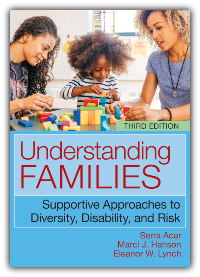 What behaviors or personal actions can early childhood providers take to make their services more family friendly and family centered? Adapted from the new third edition of Understanding Families by Serra Acar, Marci J. Hanson, and Eleanor W. Lynch, this post outlines nine family-friendly strategies that every family service provider can put into practice in every interaction with families.
Respect Family Values, Beliefs, and Practices
 Each family has a unique set of routines and rituals that characterize their style of living. The family’s culture, history, ancestry, spiritual beliefs, socioeconomic status, opportunities, and place of residence all reflect and influence family practices.
In the course of service delivery, you’ll encounter families whose values, practices, and styles differ—sometimes even radically—from your own. While some practices may feel strange or at odds with your beliefs, only when providers truly respect different families’ perspectives can they effectively enter into a working relationship and overcome differences or conflicts.
 Trust That the Family Knows Best
Families know best about what is needed for their child and their family. Clearly, in the case of families in which neglectful or abusive practices occur, you must intervene on behalf of the child—but in most cases, families are doing their best. You are in their lives for what may seem only a flash in time, while the family must adapt to the many facets and circumstances encountered by all family members and across all the events of their lives over time.

Be Sensitive to Diverse Backgrounds
Be sensitive to and supportive of the needs of families from diverse cultural, linguistic, and socioeconomic backgrounds. Review your daily routine, but this time, pretend that you’re transported to another country where you’re less familiar with the customs, services, and regulations. In addition, imagine you do not speak the language fluently. Alternatively, imagine as best you can what it would be like to be homeless and not have access to even the most basic survival needs, such as food and warm clothing.
These are the situations in which many families find themselves as they try to thrive and procure services. The jargon and policies associated with IEPs, IFSPs, and medical services are foreign to most people, but they’re likely to be even more perplexing to someone who is a recent immigrant to this country and speaks a language other than English or who has no concept of what these services entail. For some families, the service options may even violate cultural preferences or practices, such as engaging in interactions with strangers in places outside the home. And families struggling to survive day to day may have more critical priorities than providing education or related services for their children.
Acknowledge Family Members as Decision-Makers

Regardless of the situation and your judgments about what families need, family members are the ultimate decision-makers regarding their priorities and life choices. You can support family members by ensuring that they have access to resources and information, are full partners and participants in service decisions, and are provided the supports they need to make informed choices. Acknowledging families as decision-makers also means that you must respect the decisions they make, even when these choices are difficult for you to understand or accept.
 Treat the Family Members as People First
Practitioners from the helping professions are trained to focus on a particular dimension of the individual or family. It may be the child’s motor, speech, or cognitive development or the social support services needed by the family. Regardless, the child and family members are people first. They are not cases, nor are they defined by their service needs, their disabilities or health conditions, or their living circumstances. They are not problems waiting to be fixed.

Recognize That You Are a Guest in the Family’s Home and Life
Family members are involved with each other for the long haul. You will participate for only a short time in their lives, and you are a guest for that period. It is a privilege not to be taken lightly. Whether the service is needed for an extended period or a short time, you may come into a family’s home on a regular basis and will sometimes be privy to individual family members’ intimate feelings and routines. This invitation into families’ lives carries heavy responsibility for maintaining confidentiality and a respectful presence.
 Maintain Appropriate Boundaries
When building partnerships with families, most people would agree that a warm and positive relationship is valued. But it’s also important to maintain professional boundaries. A breach of conduct may interfere with the family’s ability to develop a natural support system or make their own decisions. For example, a family may come to rely on you to find needed services such as housing, food stamps, or health care. Some families may even expect you to be on call to drive them to appointments or care for the children.
While families may have crucial needs for these services, you will not always be available or able to obtain services, nor are these appropriate activities for a professional in some cases. Rather than fostering long-term dependency, help families acquire the strategies and supports they can use to advocate for and obtain services. Assist family members in feeling competent about their own abilities and developing skills to effect change and advocate on behalf of the family. Reflective practice and consultation with other team members and supervisors can be useful in preventing blurred boundaries.
Be Flexible

Families are highly dynamic systems, with their needs and perspectives constantly shifting. Service delivery structures and approaches must be able to adapt to these changing demands.
For instance, one family may prefer to have intensive supports during a crisis, whereas another may prefer to be left alone to cope with the issue within the family. Some individuals may prefer frequent opportunities to speak with you, supplemented by written materials. Other family members may prefer less frequent or less structured approaches, or they may best acquire new strategies through listening to other parents or professionals tell stories or through observing others.
Enjoy the Children and Families

Service providers are fortunate that they are welcomed into the lives of a variety of families. It’s a wondrous education and an opportunity for your personal growth in understanding, knowledge, and skills.
For many family members, particularly when practitioners are involved in interventions in a child’s early years, the service provider will hold a special place of respect and honor in their hearts for years to come. Often, you will be in the position of offering special support or lending a helping hand at a particularly emotional or difficult transition in the family’s life. The opportunity to engage at this level and in this type of relationship can bring joy and fulfillment to you and the families you work with.
Get the book behind today’s blog post for more in-depth guidance on understanding and working effectively with families!
Understanding Families
Supportive Approaches to Diversity, Disability, and Risk, Third Edition
By Serra Acar, Ph.D., Marci J. Hanson, Ph.D., & Eleanor W. Lynch, Ph.D.
With the third edition of this bestselling text, pre- and inservice practitioners will develop the critical skills and knowledge they need to understand and support diverse families of children birth to 5. Enhanced with timely updates reflecting changes in the research and the field!
More posts like this
9 Ways to Strengthen Family Partnerships
September 25, 2025
6 Things to Do Before an Early Intervention Visit
June 19, 2025
Write a Comment
Your email address will not be published. Required fields are marked *
Post a Comment