
8 Tips for Sharing ASQ Results When Children Need Support
September 15, 2026
Sharing ASQ® results with families can be a challenging part of the developmental screening process, especially when results indicate that additional support may be helpful for a child. Use the eight tips in today’s post to help you navigate these sensitive conversations with confidence.
Follow best practices for all conversations.
When sharing screening results that indicate children need more support or a referral, remember to follow general best practices when talking with families, such as being timely, valuing confidentiality, and highlighting the child’s strengths. See this tip sheet on best practices for sharing results.
Restate the purpose of screening.
Remind families that screening is a check of their child’s development to see if they are meeting milestones for their age: “Your answers on ASQ show your child’s strengths and areas where your child may need more help or practice.” Emphasize that ASQ results do not label or diagnose a child and are not a judgment of a parent’s skills. They are focused on what skills a child is doing at this time. “A result below the target may not be a reason for immediate concern. This may simply be an area where we can give Harry additional support in the classroom.”
Think about where the family is in this process.
Family members may be relieved to have their concerns valued and may be ready to accept results, or they may feel upset, express disagreement, and not be ready to accept results. If family members have already expressed concerns about their child, they may be ready to hear information and take next steps. If parents have not been concerned or if this is all new information, more time to process may be needed.

Get more resource recommendations in this roundup:
8 Essential Books for Strengthening Your Work with Families!
Use open‐ended questions.
Ask questions to gather more information about family members’ observations or concerns about their child. “Can you tell me more about how mealtimes go at your house?”
Acknowledge and summarize what the parent has shared.
Remember that it was the parent who completed the questionnaire, and reflect back what they have shared. “Based on your observations, it looks like it might be good to get more information about your child’s communication skills.”
Confirm understanding.
Ask families to tell you what they understood about the information that you shared. You might ask: “Do you have any questions about the information that I have shared today?” “What seems most important to you?” “What would you like to focus on first?” Families should be able to accurately and comfortably summarize key points about ASQ results.

Have families who are nervous about the whole screening process?
Share this For Parents page with them to provide reassuring information.
Talk about factors that may have affected results.
Many factors, such as health issues or big changes at home, have an impact on child development. If a child is not hearing well, for example, his communication skills (or behavior) may not develop as expected. Ask questions like “Do you have any concerns related to Andre’s health?” and “Has your family experienced any major changes lately? Can you tell me a little more about…”
Share learning activities and other resources.
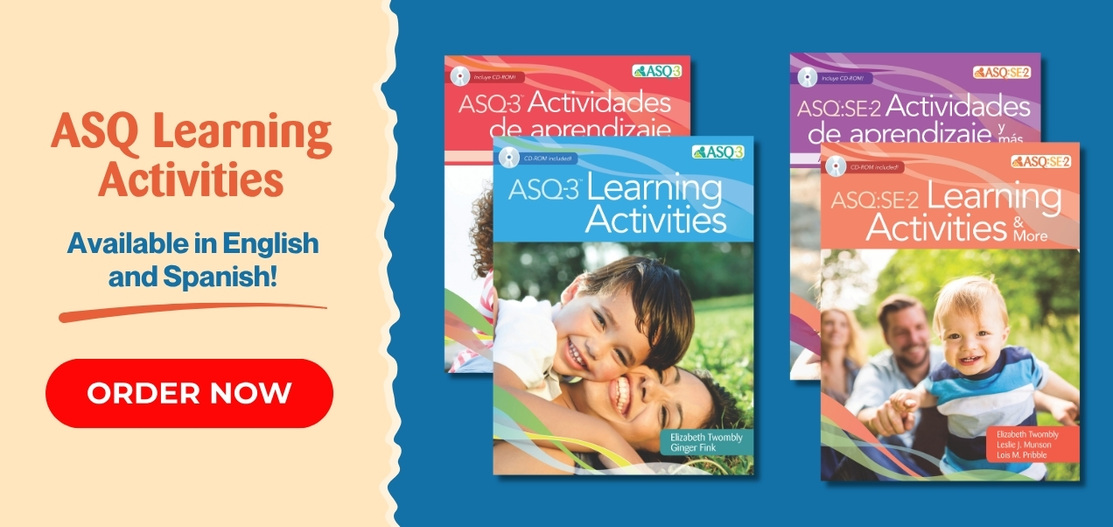
Fun and simple ASQ Learning Activities (available in English and Spanish) can help the family support a specific area of development. Share them with parents and give context: “These activities will support Sarah’s physical development. You can pick a few that look fun and try them at home.” Connect families with other resources provided by your program and community. Remember to let parents take the lead as you help them with next steps after screening!
 This post was adapted from ASQ®-3 and ASQ®:SE-2 Training Materials, by Squires, Farrell, Clifford, Yockelson, Twombly, & Potter. © 2025 Brookes Publishing Co. All rights reserved. Ages & Stages Questionnaires® and ASQ® are registered trademarks of Paul H. Brookes Publishing Co., Inc.
More posts like this

8 Essential Books for Strengthening Your Work with Families
May 21, 2026
3 Things Every Family Should Know About ASQ
March 3, 2026
Write a Comment
Your email address will not be published. Required fields are marked *
Post a Comment