
14 Small Actions that Make a Big Difference to Students
July 7, 2026
As the new school year gets underway, what are some specific, manageable actions you can take to support your students’ success? Adapted from some must-read Brookes books, here are 14 simple things you can do in your classroom to boost academic achievement, support social skills, and help students with trauma histories navigate the challenges of school.
Post and discuss directions
During class discussions, some students may worry about what you expect from them and what they’re supposed to be doing. Defusing fears can be as simple as clarifying roles and responsibilities before a discussion. Post directions and expectations on the board or pass them out so students will have an easy reference to keep on their desks during the discussion.
- Adapted from Fundamentals of Literacy Instruction and Assessment, 6–12, edited by Martha C. Hougen
Make sure all students can hear you
Make small adjustments so you can be seen and heard at every spot in the classroom. Avoid speaking with your back to students—voice volume significantly drops, and facial cues are eliminated. Routinely repeat questions and comments from other students to ensure everyone hears them.
- Adapted from True Inclusion With UDL by Patti Kelly Ralabate
Flip instructions from negative to positive
When you speak to students, phrase instructions in positive ways so they learn what you expect them to do instead of what you don’t want them to do. For example, instead of saying, “No running in the halls,” say, “Walk, please.” Or instead of saying, “Stop using putdowns,” try saying, “Tell us what you feel so everyone can feel safe.”
- Adapted from Building Trauma-Sensitive Schools by Jen Alexander

Become a trauma-sensitive educator with Ms. Jen Alexander’s books, quick guides, and on-demand virtual course!
Use a signal when you start a task
Take a second to orient your students to a new activity with a clear signal that catches their attention. This could be as simple as saying “please look at me!” before making a request. You can also try visual and auditory stimuli such as ringing a bell, clapping your hands, or flicking the lights off and then on. Tune in to your students’ eye gaze to be sure they’re oriented to the task or activity before you continue.
- Adapted from Essential Skills for Struggling Learners by Erik von Hahn, Sheldon H. Horowitz, & Caroline Linse
Model cognitive flexibility
Provide a model for flexible thinking and behavior from the stance of another person who is also learning how to figure out how to succeed at a task. For example, say to students, “I’m going to draft my ideas on paper and not even think about correct spelling and punctuation. Once I like how I have written my ideas, I will review my paper a few times. That’s when I’ll shift my focus to pay careful attention to correct spelling and punctuation.”
- Adapted from Multisensory Teaching of Basic Language Skills, Fourth Edition, edited by Judith R. Birsh & Suzanne Carreker
Avoid sudden lighting shifts
Turning on lights can be startling to some students. Avoid this overstimulation by instructing students to close their eyes as the shift to “on” is made. Try having students who are sensitive to changes in lighting be the ones who turn the lights off or on; active participation helps their systems be more prepared for the change.
- Adapted from The Re-Set Process by Dyane Lewis Carrere with Wynne Kinder
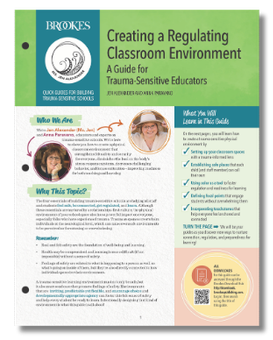
Need more practical tips on making small sensory adjustments to improve attention and focus? See this quick guide on Creating a Regulating Classroom Environment.
Don’t assume noncompliance
Instead of assuming noncompliance when a student refuses a task, acknowledge the student’s difficulty and work to discover the why. Maybe the student doesn’t know where to start, has trouble with fine motor tasks, or doesn’t have a pencil. Finding solutions and compromises (a writing rubric, providing a pencil, or allowing the student to work on a computer) are easier once a specific reason has been identified.
- Adapted from Unstuck and On Target! by Lynn Cannon, Lauren Kenworthy, Katie C. Alexander, Monica Adler Werner, and Laura Gutermuth Anthony
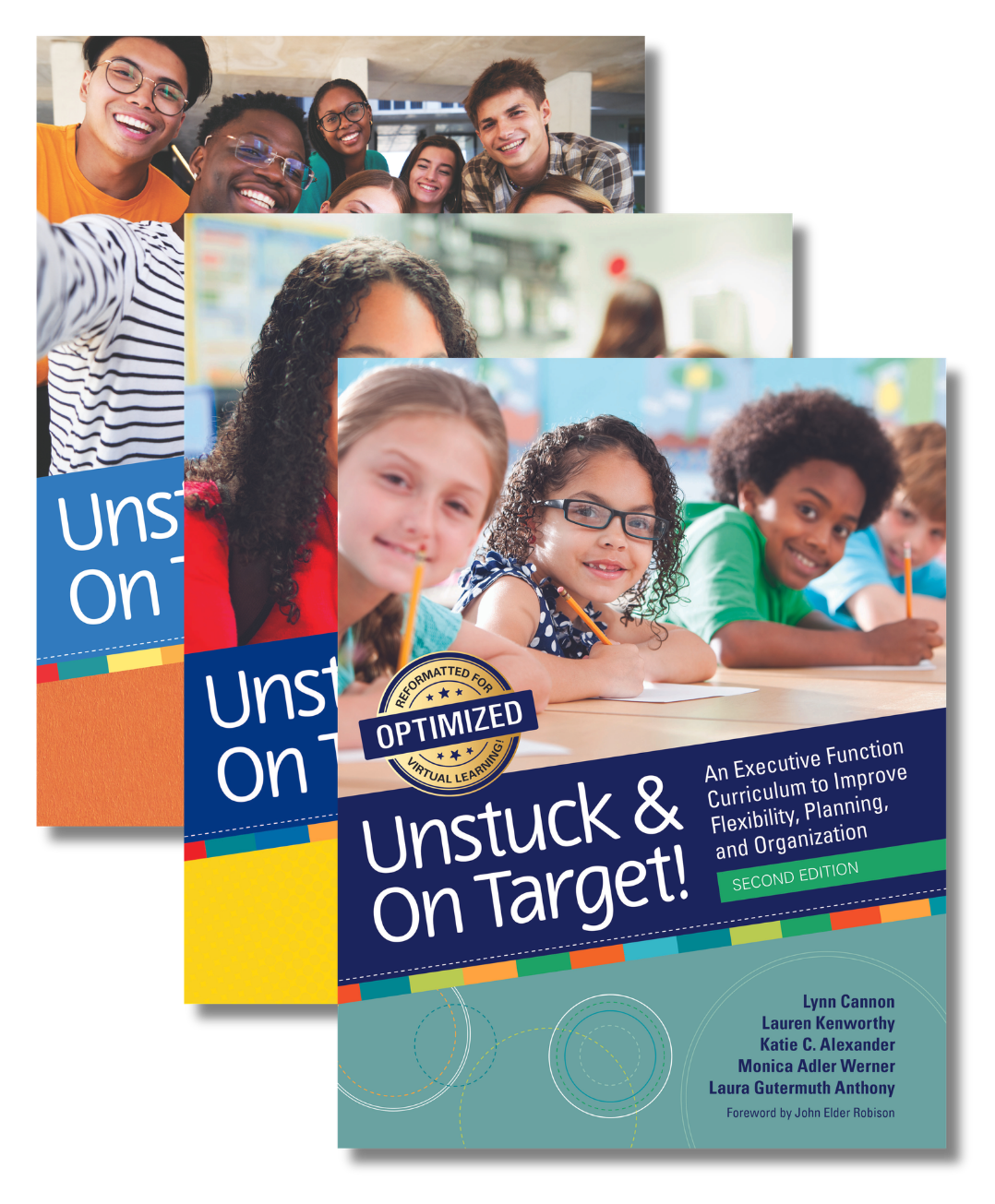
Have students with executive function challenges? Strengthen their skills with the bestselling Unstuck and On Target curricula, with volumes for three different age ranges!
Build in breaks
Make sure your students have enough movement, cognitive, and sensory breaks throughout the day. When an individual seems especially frustrated or “off,” add opportunities for vigorous exercise—for example, taking a break to do some jumping jacks. (This can be especially important for learners on the autism spectrum.)
- Adapted from You’re Going to Love This Kid! by Paula Kluth
Give students more time for transitions
Allow more time for students who need it to transition from one activity to another or gather materials. Try using a simple routine, such as a choral chant or song, to give all students time to transition from one activity to the next.
- Adapted from True Inclusion With UDL by Patti Kelly Ralabate
Put away comparison charts
Charts that compare one student to another (academically or behaviorally) can set yourself and your students up for frustration and failure. And for students with trauma histories, comparison to their peers is especially suffocating.
- Adapted from The Re-Set Process by Dyane Lewis Carrere with Wynne Kinder
Watch a coffee chat with Brookes author Dyane Carrere and learn about How Trauma Affects a Student’s Psyche: What Educators Need to Know and Do
Do quick regulation checks
Throughout the day, offer students a “regulation check.” Support student sharing if they have lingering emotions that an activity at school or an event at home or in the community might have caused. Consider giving students a “moment of mindfulness” to do some quiet breathing to clear the mind. You can also use a brain break, such as a quick yoga move, a doodle break, or rock-paper-scissors, to help them burn off some energy and anxiety.
- Adapted from The Social‑Emotional Learning Toolbox by Kathy Perez
Hold group sharing sessions
Create a safe learning environment in which all students feel comfortable discussing their feelings, wants, and needs. Set aside special times when students can talk about strengths and successes that made them proud as well as any challenges they may be struggling with. (An All About Me worksheet is a useful tool for starting class discussions. You can find one in Izzo & Horne’s Empowering Students with Hidden Disabilities.)
- Adapted from Empowering Students with Hidden Disabilities, by Izzo & Horne
Share your own feelings with students
It’s reassuring to students to know that you’re not “superhuman.” When you share your emotions, it helps them understand the connection between feelings and behavior. Don’t forget to model regulation skills by demonstrating how you take a deep breath, get a drink of water, and create space for reflection for a minute or two. (Keep in mind that you need to use your own best judgment regarding which emotions to share. What better model of emotional regulation is there?)
- Adapted from The Social‑Emotional Learning Toolbox by Kathy Perez
Small supportive actions can make a huge difference for your students. Try these during this new school year—and for more in-depth guidance, invest in these and other titles on executive function, inclusion, UDL, and more.

More posts like this
10 Trauma-Sensitive Tips to Help Students Feel Safer in School
March 17, 2026
9 Reasons Why Your School Needs a Crisis Team
May 12, 2026
Write a Comment
Your email address will not be published. Required fields are marked *
Post a Comment