
Roundup: 5 Essential Books on Early Childhood Coaching
September 28, 2026
Early childhood programs are increasingly turning to evidence-supported coaching frameworks for their professional development efforts. Why? Because coaching partnerships and other models of professional collaboration have proven to be among the most effective methods to help professionals reflect on and improve current practices, integrate and master new skills, and improve outcomes for all learners.
To help you put coaching to work within your instructional team or program, we’ve rounded up five essential early childhood coaching resources to consider adding to your professional development toolbox.
 #1-#2: Coaching in Home Visiting
Book and Workbook
By Christa Haring, Ph.D., & Angela Rau, MAT, with invited contributors
In a nutshell:
The first coaching guides specially designed for home visitors and their supervisors, this groundbreaking book and workbook answer the call for more and better training in early childhood home visiting programs. Use the book to learn the principles of building a coaching framework that strengthens relationships, promotes equity, and improves outcomes for families and staff alike. Then use the companion workbook to help translate those big ideas into daily practice.
Practical materials:
The workbook is packed with planning exercises, reflection prompts, helpful tips and strategies, vignettes and examples from the field, and advice from real home visitors. More than a dozen printable, fillable worksheets are available online.
Rave review:
“The authors empower home visitors to build trust, continually improve practice, and achieve outcomes with families through a comprehensive range of skill-based, practice-based, and performance-based techniques.”—Brad Richardson, Ph.D., University of Iowa School of Social Work
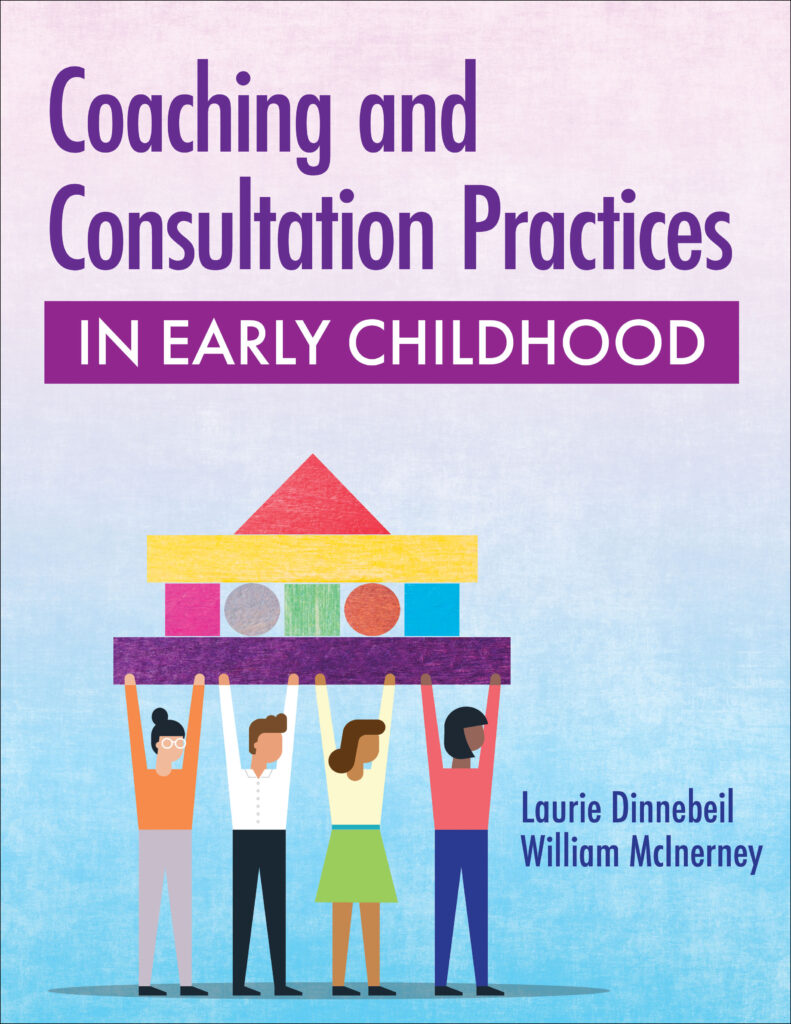 #3: Coaching and Consultation Practices in Early Childhood
Laurie A. Dinnebeil, Ph.D., & William F. McInerney, Ph.D.
In a nutshell:
The authoritative product of the authors’ years of experience in early intervention and special education, this book is an indispensable roadmap to multiple models of professional collaboration in early childhood. Equally useful as a professional resource or a textbook for courses on coaching and consultation, the book presents an engaging mix of case examples, discussion questions, and group activities to help readers master every phase of a successful collaborative relationship.
Practical materials:
More than 25 downloads—including progress monitoring forms, action plans, a planning matrix, self‐assessments, and coaching session sample logs—help lay the groundwork for successful coaching and consultation.
Rave review:
“A masterful resource for coaching and consultation practices…The emphases on adult learning and performance feedback will propel teachers and other professionals towards fidelity to evidence-based practices.”—Robin McWilliam, Ph.D., Professor, Special Education and Multiple Abilities, University of Alabama, Director, EIEIO
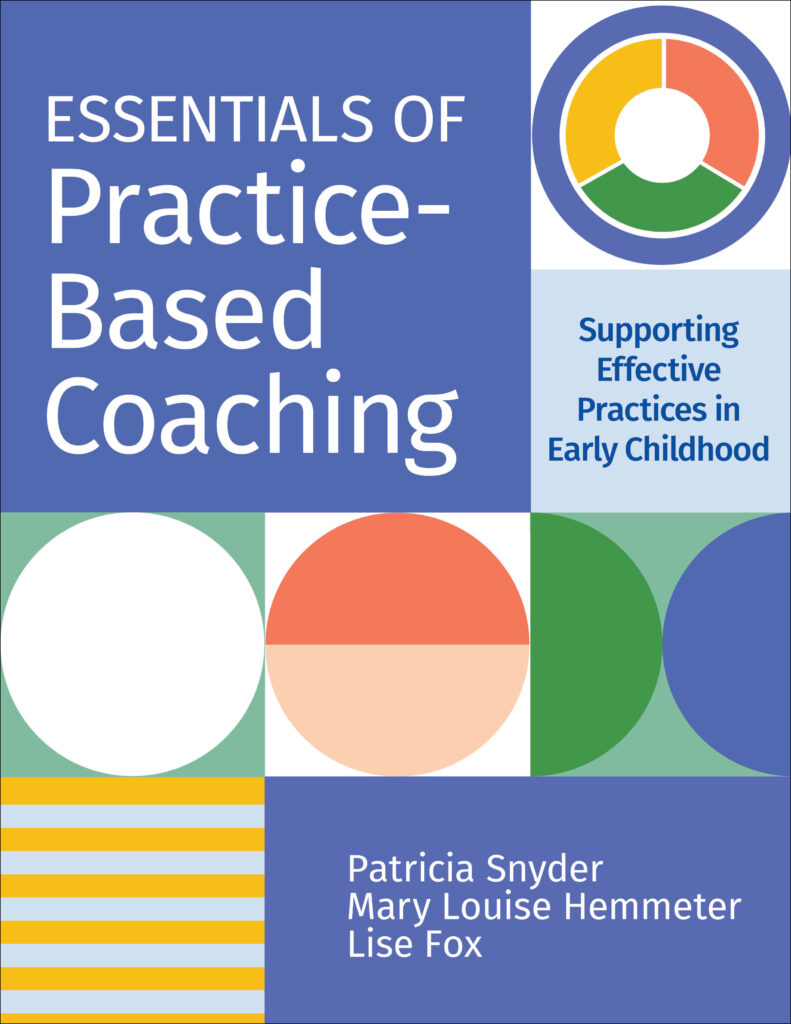 #4: Essentials of Practice-Based Coaching
Supporting Effective Practices in Early Childhood
Patricia Snyder, Ph.D., Mary Louse Hemmeter, Ph.D., & Lise K. Fox, Ph.D.
In a nutshell:
Many early childhood programs and coaches rely on Practice-Based Coaching (PBC) to ensure that professionals are effectively implementing evidence-based methods. Now the popular PBC framework has a definitive research-to-practice guide written by the experts who developed it! This book has everything readers need to help practitioners promote healthy, age-appropriate development in infants, toddlers, and preschoolers. Learn how to develop collaborative partnerships between coach and coachee, write effective goals and action plans, give supportive and constructive feedback, and more.
Practical materials:
The book includes 30+ downloadable resources, such as coaching data collection forms, a coaching strategies quick reference guide, checklists, and organizational templates.
Rave review:
“Thoroughly researched and thoughtfully designed…integrates evidence and recommended practice with the implementation strategies and procedures for early childhood educators to apply the model in their programs.” Juliann Woods, Ph.D., SLP-CCC, Professor Emeritus, Communication and Early Childhood Research and Practice Center, Florida State University
#5: 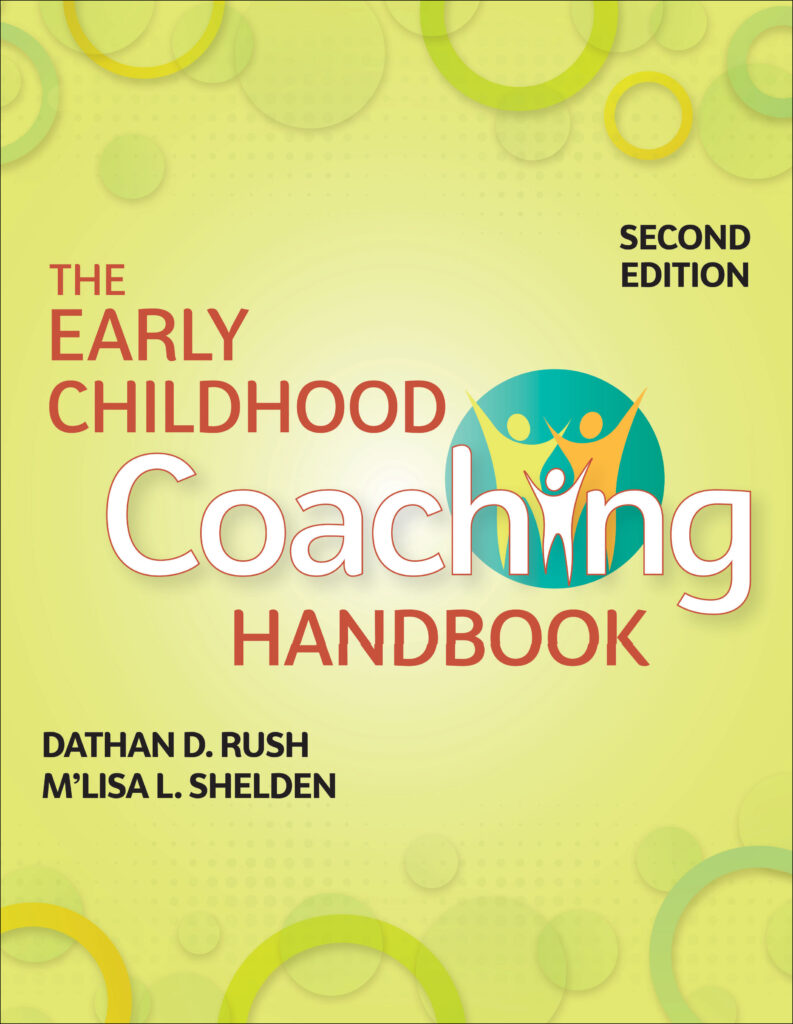 The Early Childhood Coaching Handbook, Second Edition
Dathan D. Rush, Ed.D., CCC-SLP, & M’Lisa L. Shelden, PT, Ph.D.
In a nutshell:
This handbook walks you step‐by‐step through the five characteristics of successful early childhood coaching practices: observation, action, reflection, feedback, and joint planning. You’ll learn about the essential qualities of effective coaches and discover how to adjust coaching techniques to meet the specific needs of educators, parents, and caregivers. Plus you’ll get new content inspired by user feedback, including updated research, the latest evidence‐based practices, and almost 80 pages of sample scripts and scenarios.
Practical materials:
Help cultivate ongoing coaching success with a host of downloadable resources, including a Coaching Plan, Framework for Reflective Questioning, Coaching Practices Rating Scale, and Coaching Log.
Rave review:
“A powerful book…Rush and Shelden have provided rich descriptions, powerful examples and specific content of the practice and its application to natural learning practices for families and young children.”—Mary Henricks, former preschool teacher, home visitor, and coach
Use the resources in today’s post to help your program create, maintain, and evaluate successful coaching relationships: a proven and powerful strategy for boosting the skills of practitioners, empowering families, and ensuring high-quality learning experiences for children.
More posts like this
6 Ps of Coaching in Early Childhood
October 13, 2022
7 Key Characteristics of Effective Practice-Based Coaching Partnerships
December 2, 2021
Write a Comment
Your email address will not be published. Required fields are marked *
Post a Comment