
When to Use the ASQ Learning Activities After Developmental Screening
August 13, 2026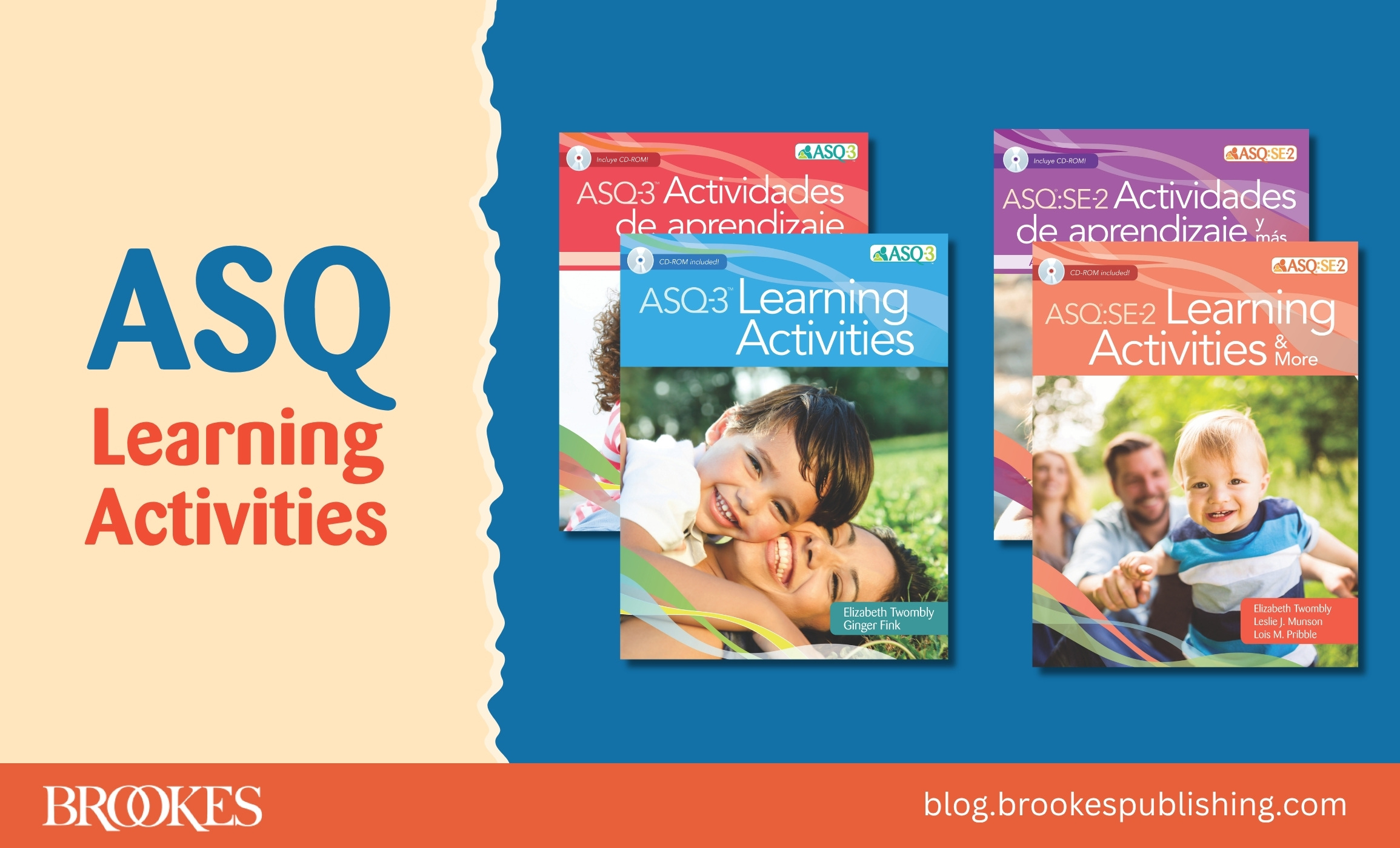
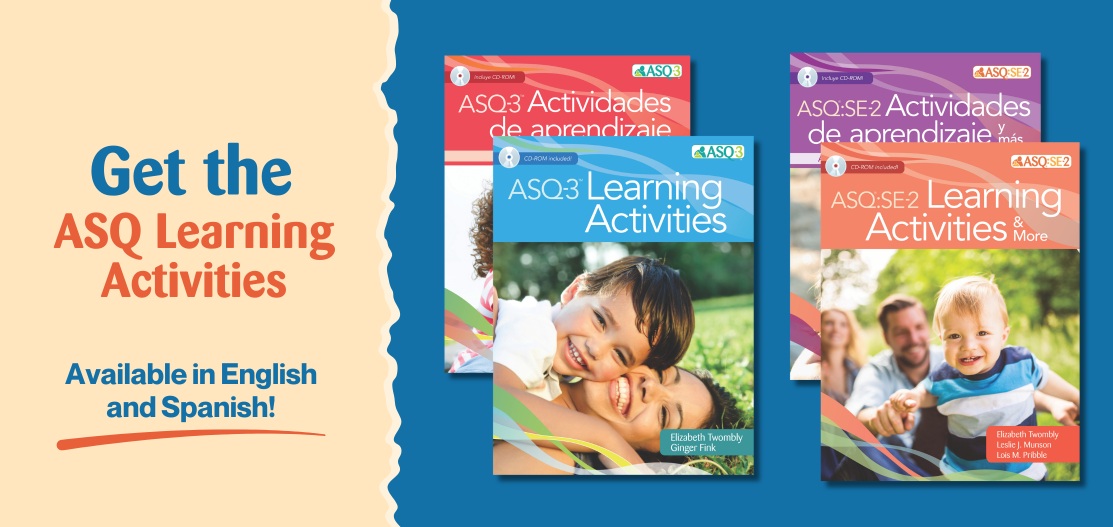
After screening kindergarten-age children with the Ages & Stages Questionnaires (ASQ), many early childhood programs use the ASQ Learning Activities are a valuable follow-up tool. These fun, simple, cost-effective activities are perfect for enhancing the growth and development of young children between screenings.
When is it appropriate to recommend learning activities after developmental screening with ASQ? Here are four different scenarios in which you may want to follow a screening with age-appropriate ASQ-3 or ASQ:SE-2 Learning Activities.
Scenario #1: A child’s ASQ-3 or ASQ:SE-2 screening results indicate that development is on schedule, and you’d like to follow up with the family to ensure that development stays on track.
 Example: You meet with Maria’s parents to review her 60-month ASQ:SE-2 results, which were below the cutoff (meaning that her social-emotional development is on track). To help ensure that Maria has a positive kindergarten experience that sets her up for long-term success, you equip her parents with the 54 to 72-month activity sheet and newsletter. You also provide age-appropriate tip sheets on healthy eating and sleeping, plus any special topic tip sheets Maria and her parents may benefit from (including Getting Ready for Kindergarten, Media and Technology, Stress and Your Child, and Positive Discipline). Use this handy chart to identify the appropriate ASQ:SE-2 Learning Activities handouts for a child’s age range.
Scenario #2: A child’s ASQ scores indicate the need for monitoring in one or more areas, and you’d like to give the family age-appropriate activities to encourage progress in those areas.
 Example: George scores in the monitoring zone for Fine Motor on his 60-month ASQ-3 questionnaire. You meet with George’s father to share the results with him and discuss follow-up. During the meeting, you give George’s dad the Fine Motor activity sheet for 54 to 60 months and ask him to try the activities at home with George. These fun, low- to no-cost ideas include making a picture frame, creating a sculpture together, and collaborating on a map of the neighborhood. You also plan to have George’s father complete the 60-month ASQ-3 again in another 2 months to monitor his development.
Scenario #3: A family shares general concerns or questions during the screening process. Regardless of their child’s total scores, you’d like to follow up with tips and/or activities that address those specific concerns.
 Example: After Isaiah’s mother completes his 60-month ASQ-3 and ASQ:SE-2 questionnaires, you review Isaiah’s results and see that his development seems to be on schedule. However, when you talk with his mother to share results, she expresses concerns about how stressful the transition to kindergarten has been for her son. You give Isaiah’s mom the Stress and Your Child tip sheet, found in the ASQ:SE-2 Learning Activities and More, and provide some suggestions for helping Isaiah through the challenges of a big change.
Scenario #4: A child has scores in the referral area (below the cutoff on ASQ-3 or above the cutoff on ASQ:SE-2), but is found not eligible for services. You’d like to help parents address the areas of concern at home.
 Example: Samira scored below the cutoff in the Communication area on the 60-month ASQ-3, but after a full evaluation, she was not found eligible for services. When you meet with Samira’s parents, you provide them with the 54 to 60-month Communication activity sheet, along with the activity sheets for the other 4 developmental areas. You encourage them to work on the activities at home to help encourage their daughter’s development.
As with the entire ASQ system, the Learning Activities can be used flexibly to support families and meet their individual needs. You may want to clarify, reframe, or adapt some of the information to make it more accessible to a family or more compatible with their values or parenting practices. You can also use the activities to help guide conversations with parents about their child’s development and upcoming milestones.
By sharing these fun, age-appropriate activities with families of young children, you’re reinforcing parents’ efforts to support their child’s development—and encouraging them to enjoy happy times with their children at home.
More posts like this

5 Ways to Create an Uplifting Workplace for Early Childhood Professionals
October 13, 2026
Roundup: 5 Essential Books on Early Childhood Coaching
September 28, 2026
Write a Comment
Your email address will not be published. Required fields are marked *
Post a Comment