
Why MATRS Matters: Your New Tool for Assessing Morphological Awareness
July 16, 2026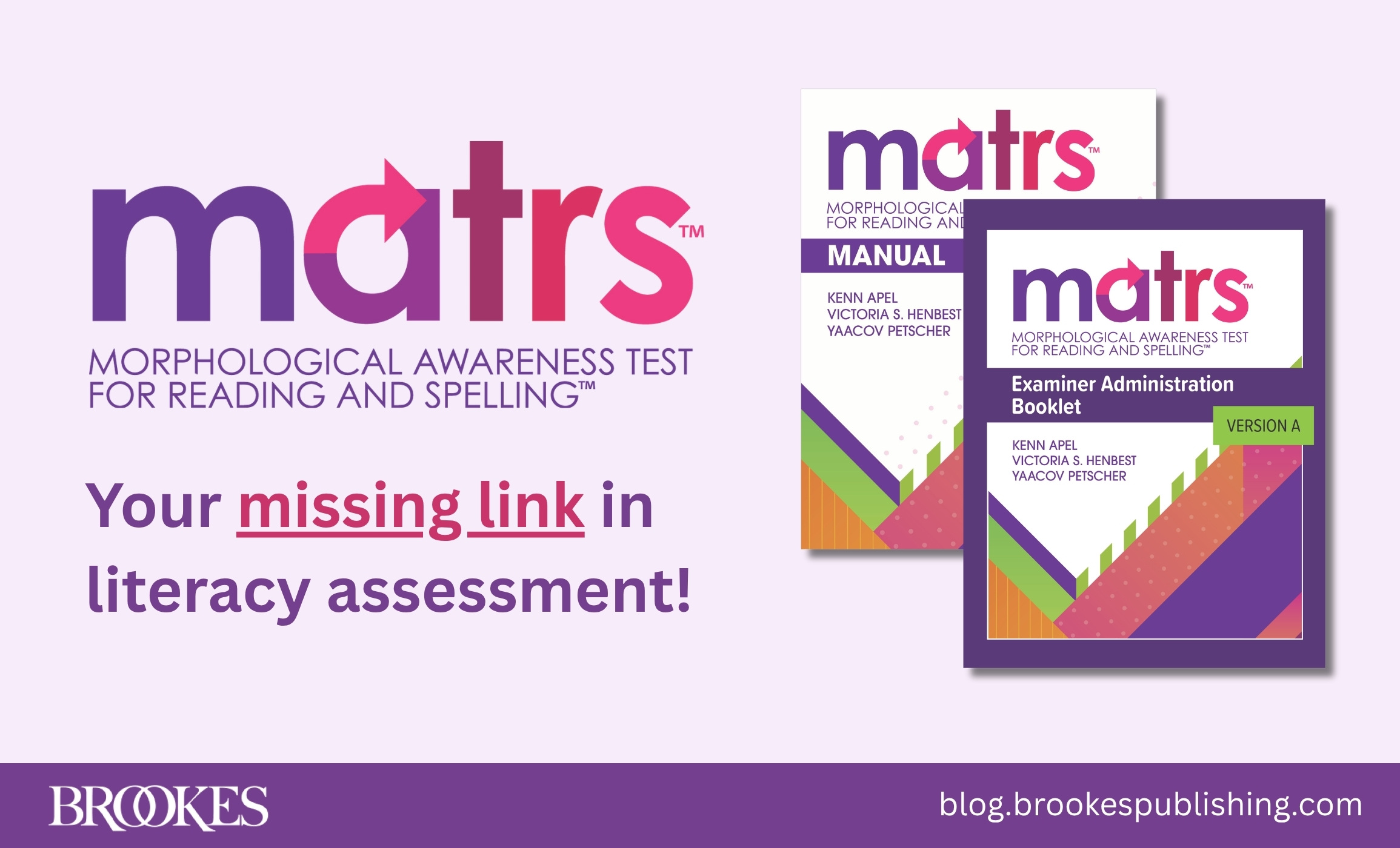
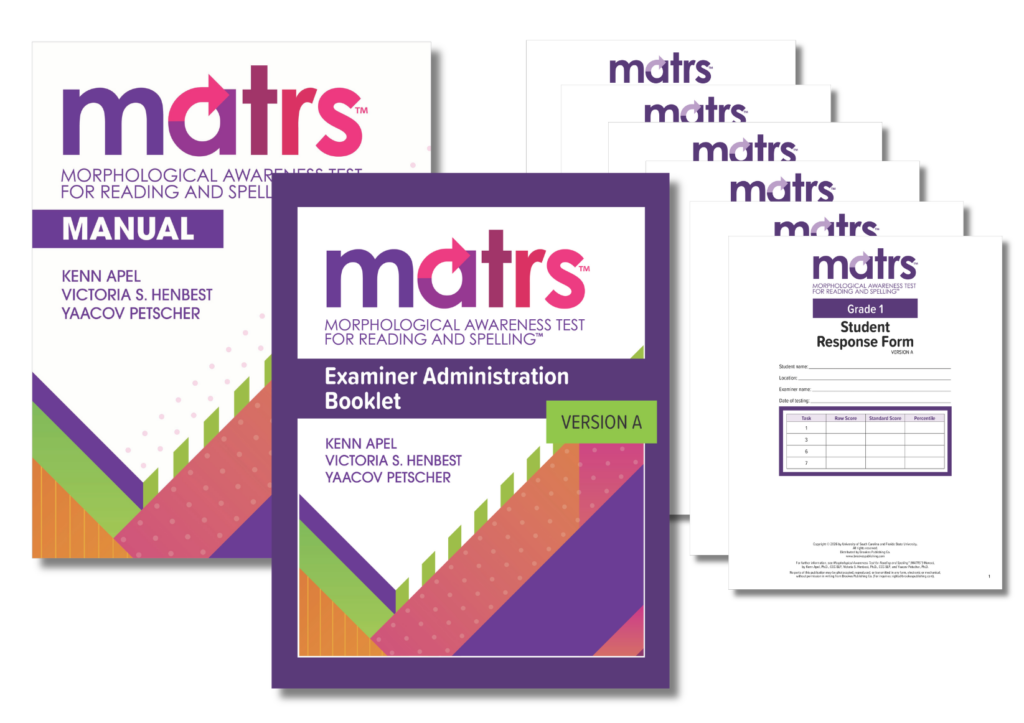 Today’s guest post is by Kenn Apel and Victoria Henbest, two of the co-developers of the new Morphological Awareness Test for Reading and Spelling™ (MATRS™). Dr. Apel and Dr. Henbest are here to talk about why MATRS matters—and why this tool is your “missing link” in literacy assessment for Grades 1–6.
***
Sometimes, you have a student who is struggling with reading and spelling, but you don’t know why. You also may want to qualify that student for services in school, but none of the “typical” assessments seem to help you determine why the student is struggling.
One possible reason is that you don’t have the right assessment tool to guide you in explaining a contributing cause for that student’s struggles. The new MATRS tool can help you solve this problem.
 MATRS assesses a skill that has shown itself to be quite influential in helping students read and write. It also may be a reason why they are struggling in the first place. That skill is morphological awareness: the ability to think about morphemes, the smallest units of meaning in a language. In English, that includes simple base words like cat, jump, and magic, as well as the prefixes and suffixes we attach to base words, like the ‘s’ in cats, ‘ed’ in jumped, and ‘ian’ in magician. It is important to be able to think about those add-ons because many English words contain them and English spellings are ruled by them.
Diagnosing Morphological Awareness Deficits
MATRS is the only available standardized, norm-referenced diagnostic test that comprehensively assesses morphological awareness, a skill identified by the International Dyslexia Association as a notable factor for why students aren’t able to develop literacy skills like their peers. IDA’s definition of dyslexia addresses this lack of ability: “Dyslexia is a specific learning disability….(which may be characterized by)…underlying difficulties with phonological and morphological processing.”
 A student may meet normative expectations on some standardized tests that are typically given to determine why a student is struggling with reading and spelling. However, that does not mean there is no explanation for why the student is struggling. Instead, it likely means the tests used were not measuring morphological awareness in a standardized, norm-referenced manner.
MATRS can serve as a prescriptive assessment because it is possible that students may perform at or below grade-level on one or more of the four components of morphological awareness:
- Awareness of spoken and written morphemes
- The meaning of affixes and how they can alter the meaning and/or grammatical class of base words when they are applied
- How affixes are attached to base words, including any modifications to written base words when they are attached
- The relation between base words and their inflected and derived forms
Based on a student’s performance on each of the MATRS tasks, you can develop specific instructional tasks to improve their skill with the aspects of morphological awareness that were challenging and not waste your time instructing them in areas in which they have grade-appropriate abilities.
Easing the Assessment Process
There are several aspects of MATRS that will aid you in the ease and speed of testing. For example:
- MATRS includes short videos that demonstrate how each task is administered, so you have a clear understanding on how to give each task.
- There is an automatic standard score conversion process so you can determine students’ scores quickly and easily.
- There are two forms to MATRS so that you can monitor a student’s progress. Administer Form A as a pre-test before instruction begins, and then give Form B after a certain amount of instruction has occurred as a post-test to measure growth. Having the two different forms that equate with one another ensures you are not “teaching to the test.”

Instruction After Assessment
As mentioned above, MATRS helps you determine which specific areas of morphological awareness are best targeted for instruction. There are two other helpful features when a student is identified as needing instruction in morphological awareness.
- First, MATRS provides you with a document that helps explain morphological awareness and its importance to parents. When parents understand morphological awareness and how instruction targeting that skill will be helpful, they likely will be more on board with the instruction you provide their child.
- Second, the MATRS manual features a whole chapter on hypothetical cases of students who perform below grade-level on different morphological awareness components. The case studies also report the kinds of instructional activities that were implemented to help target those problems. These case studies will provide you with concrete ideas for how you might help your students who are struggling in different areas of morphological awareness.
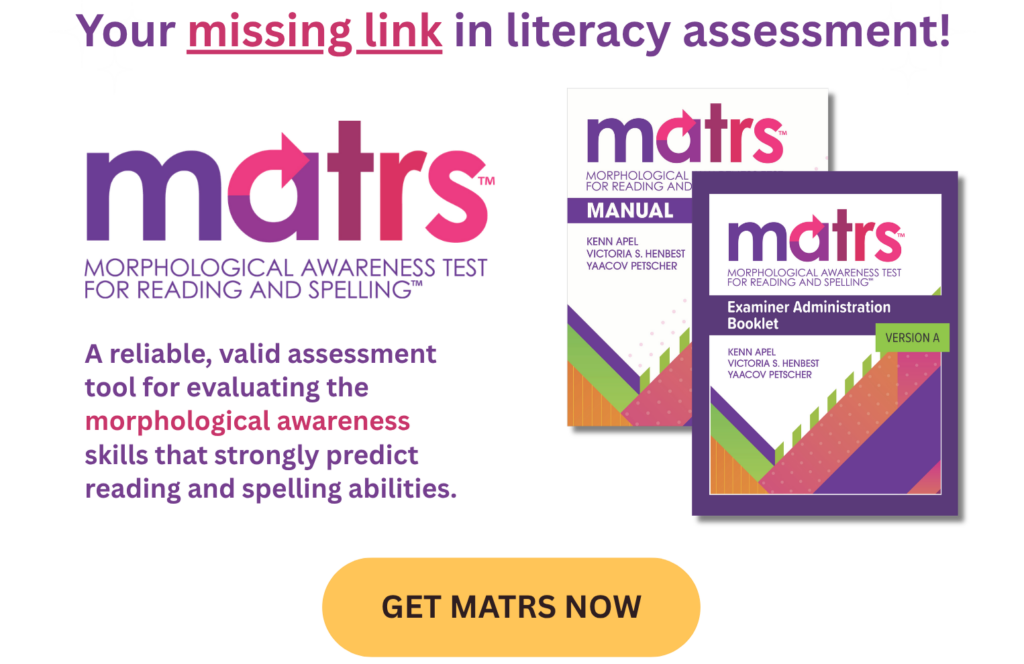
With MATRS, your school will have the comprehensive, reliable, and valid tool needed to assess critical morphological awareness skills—and identify challenges that could impact future reading and spelling abilities. Learn more about the tool and invest in your students’ future literacy success!
More posts like this

Improving Comprehension with Collaborative Strategic Reading
May 20, 2025
6 Don’ts for Increasing Students’ Reading Fluency
June 26, 2025
Write a Comment
Your email address will not be published. Required fields are marked *
Post a Comment