
5 Tips for Creating a Communication-Friendly Classroom
April 23, 2026
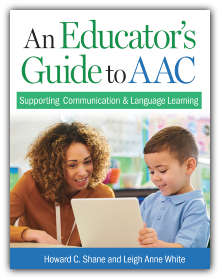 For learners who are non- or minimally speaking, specially designing a communication-friendly classroom will help support their developing social and academic skills. Carefully selected technology is a given in a communication-friendly classroom, but other factors are important, too.
Don’t overlook these strategies—adapted from the new book An Educator’s Guide to AAC—when you’re creating a nurturing and supportive learning environment for students who are non- or minimally speaking.
Set Guidelines for iPad Use

Balancing technology in education requires ongoing effort and adaptation. But with thoughtful implementation, tech can significantly enhance learning. When a tablet is a learner’s communication platform, it needs to be available throughout the day—in the school as well as at home.
A best case, when possible, is to have a dedicated device only for communication purposes and another for entertainment. Because this is not always possible, “iPad entertainment time” should be put in place. Set clear guidelines that include rules for when and how technology should be used throughout the school day and in the home. This can include designated tech-free times or zones.
Manage Auditory Distractions
 Ambient, background, and routine classroom “noise” can either amplify or hinder learning and affect cognitive performance and communication. Examples of distracting classroom sounds can include:
- Loud or soft conversations or chatter among students
- Chairs scraping against the floor
- Pencil tapping or fidgeting items clicking
- Rustling papers or books
- Footsteps in the hallway
- Classroom equipment like projectors or computers humming
- Outdoor noises such as traffic or playground sounds
- Ringing phones or notifications from digital devices
- Keyboard clicking
- Classroom bells or announcements
Watch for any unusual reactions to sound, such as a learner holding (covering) their ears in the presence of noise or having a strong response to noise. For learners who are notably distracted by sound, explore ways to reduce auditory distractions, such as noise-canceling headphones, preferential seating, a quiet corner, and clear and concise instructions.
Monitor the Impact of Scents
 There are often behavioral consequences from exposure to particular odors, especially for individuals with sensory sensitivities. Mild scents that others might find pleasant can be overwhelming and cause discomfort and a sense of loss of control over their environment. In a classroom environment, exposure to certain scents may disrupt focus, engagement, and participation.
A student’s inability to express frustration or discomfort around particular odors can exacerbate feelings of frustration or confusion. Given the impact of scent on behavior, it is essential to create an olfactory-neutral environment or one that uses mild, familiar scents carefully selected in consultation with your students and/or their caregivers (Spence, 2020). Allowing the family and affected individuals to have a say in the choice of scents, or avoiding scents altogether, can create a more supportive, calming environment.
Offer Small Objects to Hold (When Helpful)
 For autistic students and others with sensory processing and self-regulation challenges, holding small objects may:
- Provide soothing tactile input, which can help students regulate sensory overload
- Satisfy the desire for repetition and predictability
- Serve as a coping mechanism to manage anxiety or stress
- Act as “transitional objects” that help students feel safe and grounded in overwhelming situations
- Support focus and attention
Make an effort to understand each student’s preferences for small objects and how they relate to their sensory needs. Some learners require an increase in sensory input to support attention, so handling objects may facilitate their focus and should not be considered a distraction. These objects become a manual distraction when fidgeting with objects interferes with a learning task (such as sorting or stacking). To avoid manual distractions, remove manipulatives when a learning task requires using hands.
Support Communication Between School and Home
 Recognizing parents or other caregivers as valuable special education team members emphasizes the importance of collaboration, communication, and shared decision making. Many parents have unique insights into their child’s strengths, challenges, and individual needs, which can greatly contribute to effective educational plans.
It’s especially important to improve communication among caregivers and school teams, given that non- or minimally speaking students aren’t always readily able to discuss their school day with caregivers. Support communication between school and home by:
- Creating a classroom website. Include important information such as class schedules, homework assignments, daily behavior and progress, resources for parents, and upcoming events.
- Using a dedicated app to send relevant messages and videos to parents and provide a platform for parents to ask questions and share concerns. This can be especially helpful for parents who may not be able to attend in-person meetings or conferences.
- Exchanging photographs of daily activities in school or family events. This provides an effective scaffold for learners who are non- or minimally speaking to describe an event in which they participated.
- Video conferencing—a great way to connect with families who live far away or have busy schedules. Video conferencing can also be used for parent-teacher conferences, individualized education program meetings, and other important discussions.
- Starting a low-tech journal that travels between home and school on a daily basis. This could contain a handwritten chronicle of questions, comments, and recommendations between home and school.
A communication-friendly classroom atmosphere will provide a better learning environment and more effective support for non- or minimally speaking students and their families. For more guidance on promoting the communication of students with significant support needs, get the new book behind this blog post!
More posts like this
4 Ways to Presume the Potential of Non- or Minimally Speaking Students
January 20, 2026
Author Q&A: Dr. Howard Shane on His Unforgettable New Memoir, UNSILENCED
October 28, 2021
Write a Comment
Your email address will not be published. Required fields are marked *
Post a Comment