
8 Ways Beautiful Beginnings Enhances Early Childhood Programs
August 4, 2026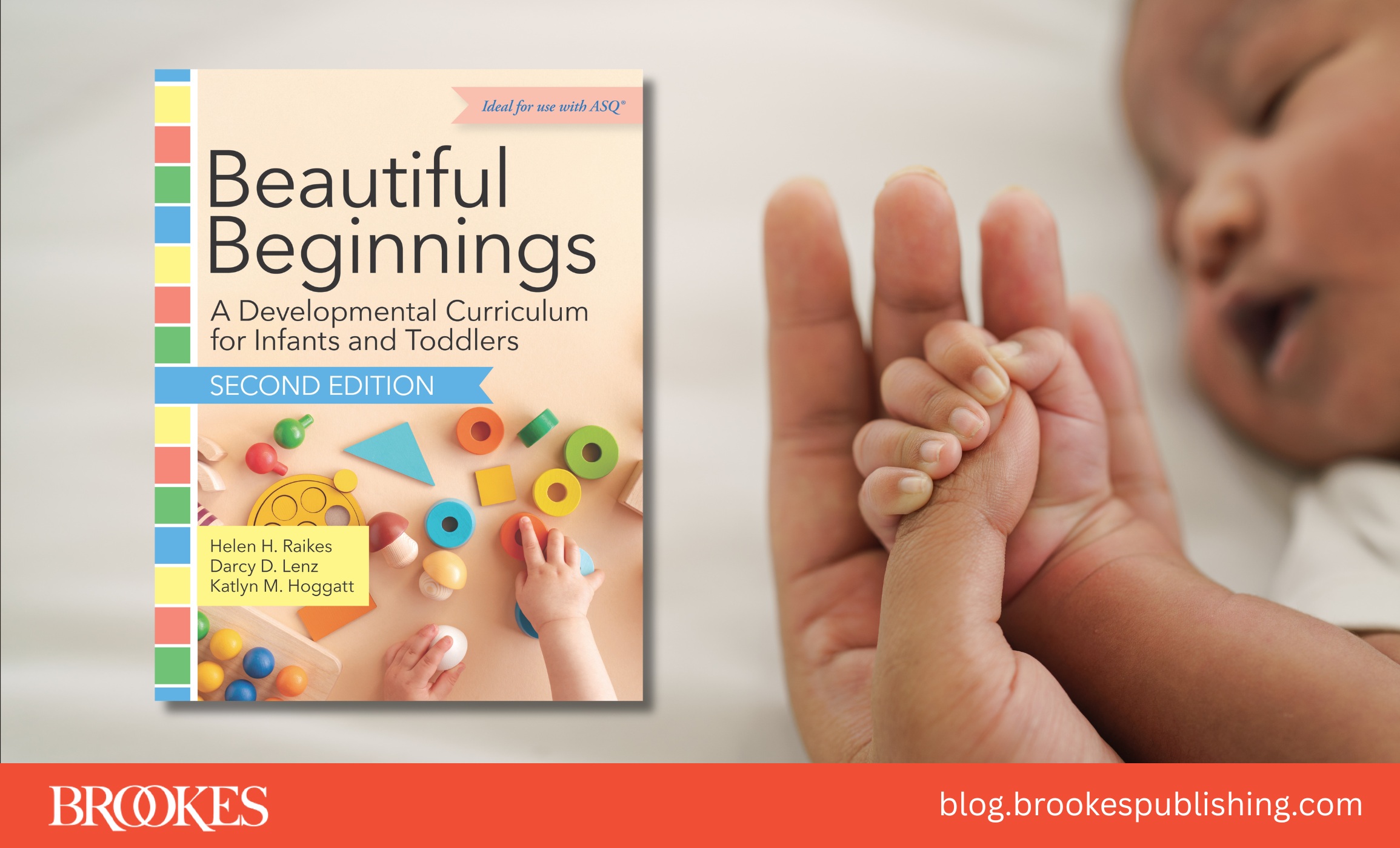
 We’re excited to announce the release of the brand-new edition of Beautiful Beginnings: A Developmental Curriculum for Infants and Toddlers! Early childhood programs will love this joyful, activity-based approach to enhancing child development in the first years of life.
Aligned with ASQ® and CDC developmental milestones, the new edition of this extensive, research-supported curriculum includes more than 350 photocopiable, easy-to-use activity sheets (called Experiences) that target eight developmental areas important to school readiness:
- Communication
- Gross Motor
- Fine Motor
- Intellectual
- Discovery
- Social-Emotional
- Self-Help
- Pretend
Beautiful Beginnings can enhance any infant-toddler program—whether the focus is home visiting, child care, or parenting more generally—in many ways. Here are 8 big things this curriculum can do for your program:
- Beautiful Beginnings encourages parents and child-care providers to observe children’s development and encourages them to watch more carefully for new developments.
- Beautiful Beginnings leads the parent, teacher, or home visitor who may not be familiar with all of the stages of child development through early development, providing the adult with hands-on opportunities. One longtime user of the first edition of Beautiful Beginnings said, “It was my child development teacher.”
- Beautiful Beginnings provides a mechanism for infant-toddler child-care programs to focus on development rather than solely caregiving, which could lack an intentional developmental component.
- Beautiful Beginnings provides a formalized way for parents, teachers, and home visitors to work together. Although it takes some planning and coordination for everyone to provide input in regular goal setting and follow through, the opportunities on behalf of the child are tremendous.
- Beautiful Beginnings can provide a record of a child’s early development through the use of a portfolio or notebook where teachers, home visitors, and parents enter Experiences on a Goals Sheet and record the child’s responses. The portfolio can be personalized and embellished with photos, children’s artwork, and more, creating a beautiful memento of early development that families can keep.
- Beautiful Beginnings provides a way to create a safety net for children who may need more support and stimulation in a particular area of development (e.g., children who may not be developing optimally in some areas).
- Beautiful Beginnings can assist teachers in both individual and group planning of Experiences for individuals and activities for groups. If used in a group setting, Beautiful Beginnings can help create a well-equipped infant-toddler setting. Materials for nearly all of the Experiences included in Beautiful Beginnings for children 18 months and older can be organized into learning centers and made continuously available in a toddler child-care center.
- Most importantly, Beautiful Beginnings can help teachers, home visitors, and parents provide children with Experiences that match their emerging developments, give them well-timed opportunities, and gently offer stimulation and engaging, fun activities in all areas of development. Successful matching by teachers, home visitors, and parents is further rewarded by children’s positive energy, focus, and motivation.
Invest in Beautiful Beginnings today! It’s one of the best ways to build on each child’s strengths and interests and encourage progress in the developmental areas that are key to school readiness.
Beautiful Beginnings
A Developmental Curriculum for Infants and Toddlers, Second Edition
By Helen H. Raikes, Ph.D., Darcy D. Lenz, M.Ed., & Katlyn M. Hoggatt, M.Ed.
“Imaginative, carefully crafted…a must-have for practitioners committed to nurturing the whole child from birth onwards.” —Jane Squires, Ph.D., Emerita Professor, University of Oregon; Developer, ASQ®
More posts like this
5 Supports for Inclusive Small-Group Activities
June 18, 2026
How to Boost Learning with Breathe–Move–Learn: Sample Lesson 1
June 16, 2026
Write a Comment
Your email address will not be published. Required fields are marked *
Post a Comment