
How Dialogic Reading Helps Young Children Think and Learn
August 20, 2026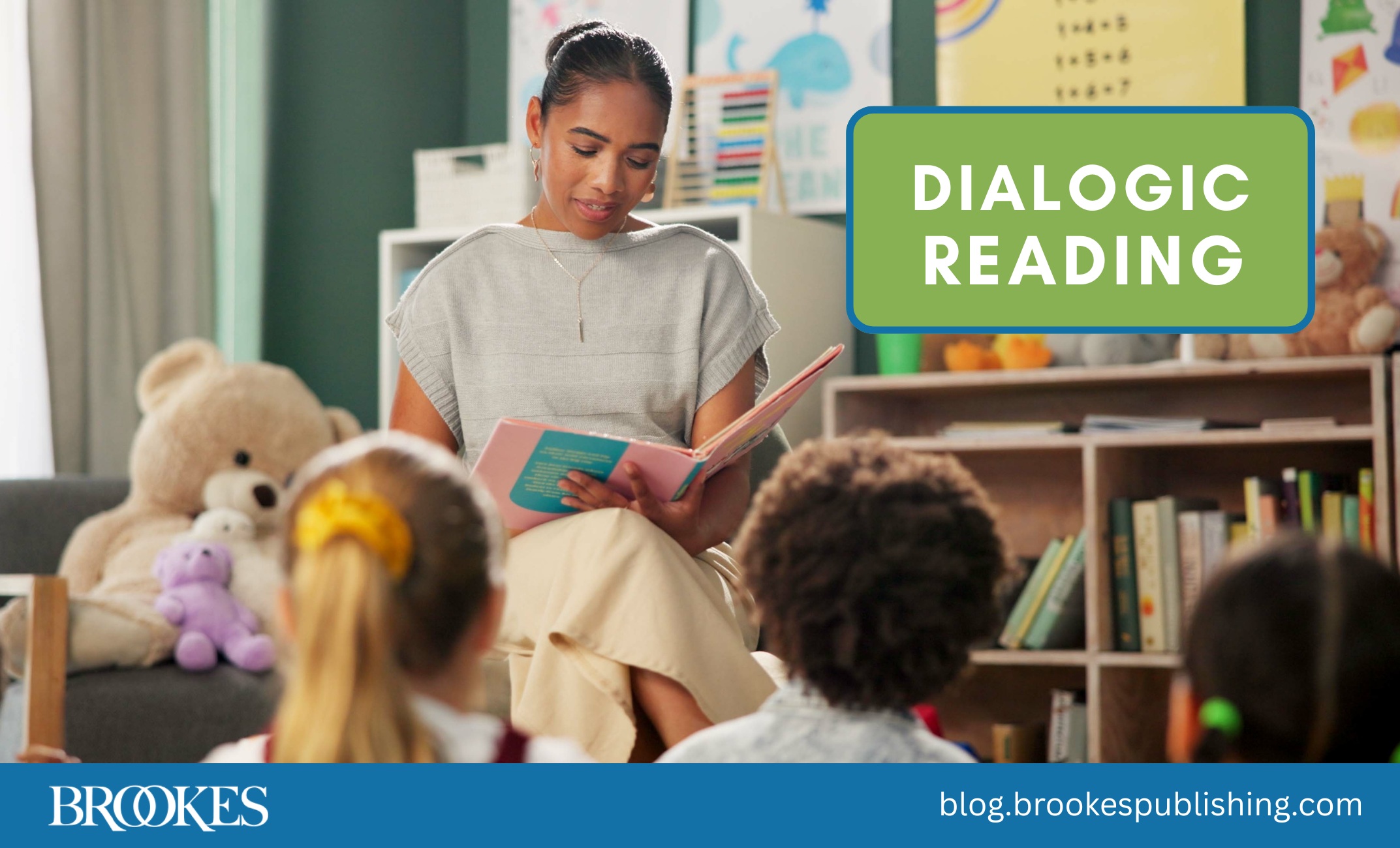
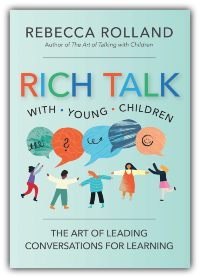 This blog post was adapted from Rich Talk With Young Children by Rebecca Rolland, your practical guide to rich, intentional conversations that nurture all aspects of child development.
Dialogic reading—engaging young children in intentional conversation about a book as you read it out loud—is a powerful tool for fostering language development and early literacy skills. Children are active in this process, asking how and why questions and using books to jumpstart their thinking and learning.
Benefits Of Dialogic Reading
There are many benefits to encouraging young children to think critically about the stories you read and express their own ideas. Engaging in interactive conversations about books:
- Exposes children to new vocabulary, sentence structures, and storytelling techniques
- Helps children develop a deeper understanding of the text and enhances their comprehension skills
- Promotes critical thinking, problem solving, and imagination
- Nurtures children’s cognitive development and fosters a lifelong love of learning
Robust research supports dialogic reading as a powerful strategy. Studies going back decades (e.g., Dickinson & Smith, 1994) found that certain interactions in preschool classrooms link to improved vocabulary: those occurring while the story was read, those involving both children and teachers, and those that were analytic in nature, asking for reflection.
How Does Dialogic Reading Work?
Dialogic reading involves a series of open-ended questions that encourage children to think about the story and express their own ideas. These questions can focus on the illustrations, characters, plot, or overall theme of the book. The goal is to create a conversation between the reader and the child, where the child is actively engaged and participates in the storytelling process.
By asking questions that require more than a simple “yes” or “no” answer, teachers encourage young children to think critically and develop their language skills. Examples of open-ended questions for different age groups include the following:
- Toddlers: “Which page was your favorite?”
- Preschoolers: “How does the bear feel when he hugs the rabbit?” “What do you think the fox is thinking?”
- Kindergarteners: “Why do you think the character made that choice?” “Can you tell me a story about a time when you felt like the character?”
When reading, try asking children questions such as:
- Tell me more about why that character seemed sad. (Expanding)
- What would it feel like to be that character? (Exploring)
- How would you have changed the ending? (Evaluating)
What To Avoid
The following is a list of things to avoid during dialogic reading:
- Overquestioning: Too many questions can interrupt the flow of the story and discourage the child from engaging.
- Correcting mistakes: Focus on overall understanding rather than correcting minor errors.
- Dominating the conversation: Allow the child to take the lead and express their own ideas.
- Rushing through the book: Take your time and enjoy the storytelling experience.
- Focusing solely on decoding: Although decoding is important, do not forget to emphasize comprehension and engagement.
Cultural Responsivity Is Key
Though dialogic reading has many clear benefits, it’s also critical to be culturally responsive. One size almost never fits all. Not all cultures and microcultures feel comfortable reading this way—and the important thing is that the practice feel warm, welcoming, and engaging for both adults and children. Moving forward, tailor your strategy to one that suits both you and your classroom’s needs.
Rich Talk With Young Children
The Art of Leading Conversations for Learning
By Rebecca Rolland, Ed.D., M.S., CCC-SLP
Engaging, conversational, and grounded in the latest research, this book illuminates the transformative power of rich talk with children ages 2–8—and gives you the specific guidance you need to realize its benefits in any learning environment.
Reference
Dickinson, D.K., & Smith, M.W. (1994). Long-term effects of preschool teachers’ book readings on low-income children’s vocabulary and story comprehension. Reading Research Quarterly, 29(2), 104–122. https://doi.org/10.2307/747807
More posts like this
6 Fun Games for Reinforcing Alphabet Knowledge
August 29, 2024
11 Fun Animal Activities That Encourage Early Language & Literacy Skills
September 15, 2022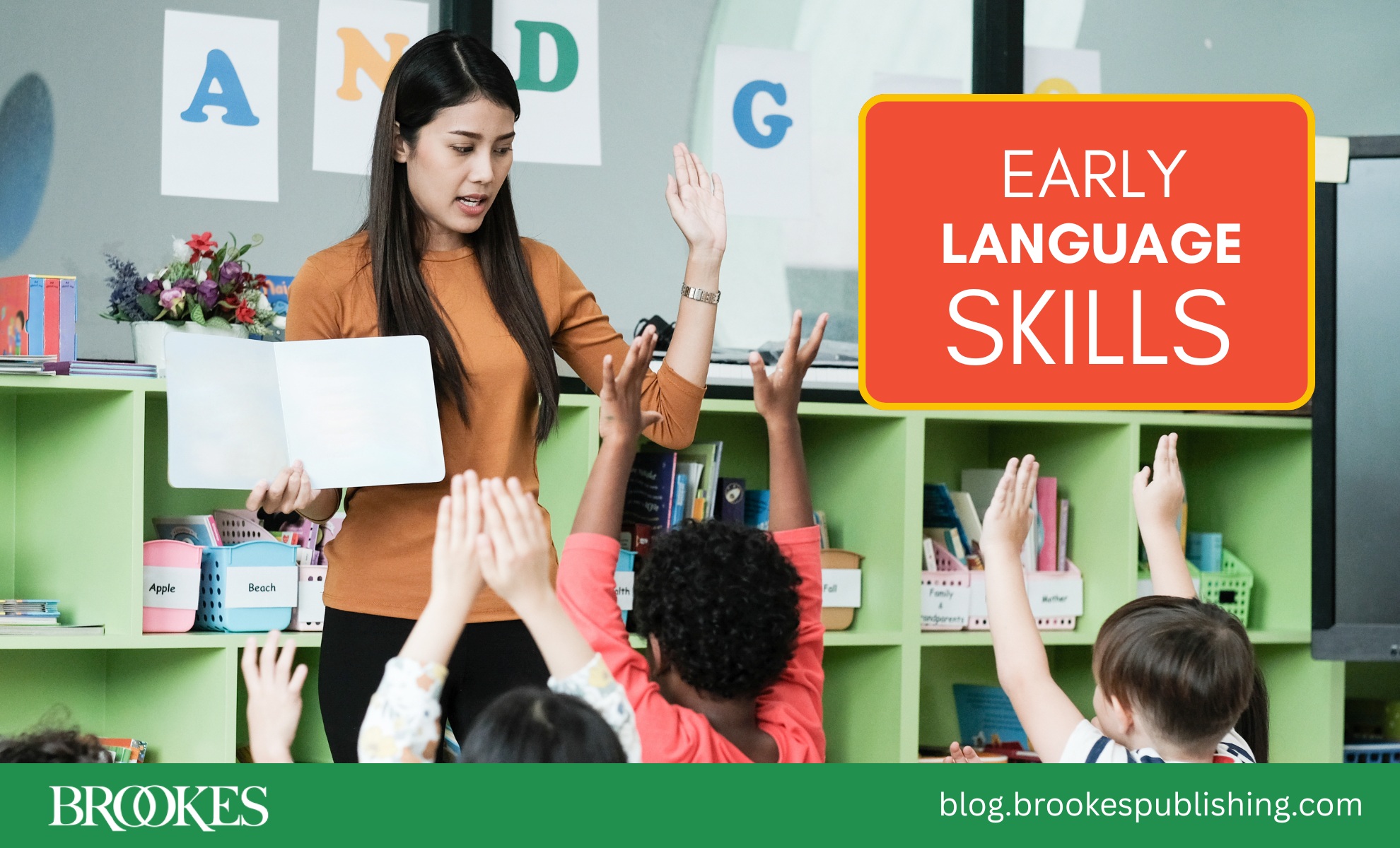
Write a Comment
Your email address will not be published. Required fields are marked *
Post a Comment