
11 Things Supervisors Should Do to Support Instructional Coaches
December 9, 2025
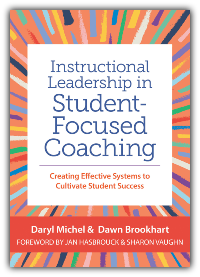 Instructional coaching is a highly effective form of professional development and learning (PDL) in K-12 schools. As Daryl Michel and Dawn Brookhart point out in their popular new guidebook Instructional Leadership in Student-Focused Coaching, coaches are most effective when they work in true partnership with their supervisor.
To maximize this partnership and set the stage for sustainable coaching programs, Michel & Brookhart recommend that supervisors focus on the following priorities:
- Understand the role of coaches. The coach’s job is to provide support for PDL. The most effective way to do this is to engage in systematic, collaborative problem solving, rather than simply observation and feedback (coaching cycle).
- Understand that coaches are not supervisors. Coaches cannot ethically or legally be involved in the evaluation of teachers, either directly or indirectly. Coaches have no power or authority over their peer colleagues. They work as peer partners to their teacher colleagues to support effective classroom practices to promote positive student outcomes.
- Fully honor the confidentiality of the coaching/teacher relationship as appropriate. Although supervisors cannot mandate coaching to any teacher, they can strongly suggest to a teacher that they seek support from a coach. Such a suggestion would be confidential and cannot be shared with the coach without the permission of the referred teacher.
- Take responsibility to clearly define and describe the coach’s role to the teaching staff. State any obligations of the staff for working with the coach (e.g., a mandate to share current student performance data with the coach is highly recommended). It’s also important to clarify the limitations of the coach’s role.
- Help coaches find sufficient time in their busy schedules to design and provide effective PDL to peer colleagues.
- Work to strengthen the coach and supervisor partnership by having regularly scheduled formal conversations with coaches to discuss their role, how they are spending their time, and how you can be an effective professional partner to support their work.
- Effectively supervise coaches by regularly providing specific feedback for professional growth.
- Support the coach’s efforts to successfully implement systems of support (e.g., MTSS framework, leadership team).
- Ensure that coaches keep learning about instructional practices supported by the best possible research. Coaches should continue to read and study, seek out their own PDL opportunities, and access the support of colleagues and outside resources to gain new knowledge about effective teaching and effective coaching.
- Understand and work to implement the elements of the SAILS framework for effective schools. SAILS stands for standards, assessments, instruction and intervention, leadership, and sustainability. (See Instructional Leadership in Student-Focused Coaching for a complete chapter on SAILS.)
- Create a climate and culture for student success so teachers will be inspired with the desire to teach all students effectively. Coaches then provide collegial support to help teachers achieve this goal.
See the new book for a complete guide to grow sustainable coaching programs that bridge the research-to-practice gap and cultivate student success!
Instructional Leadership in Student-Focused Coaching
Creating Effective Systems to Cultivate Student Success
By Daryl Michel, Ph.D., & Dawn Brookhart, M.A.T., M.Ed.
Aligned with Implementation Science and developed by two internationally known consultants, this is the practical guidebook educational leaders need to build their knowledge of coaching and master their critical role in the coaching system as instructional leaders.
More posts like this
Instructional Leadership in SFC: Why It Matters, What to Do
September 11, 2025
Student-Focused Coaching: 10 Best Practices for Administrators and Supervisors
June 4, 2024
Write a Comment
Your email address will not be published. Required fields are marked *
Post a Comment